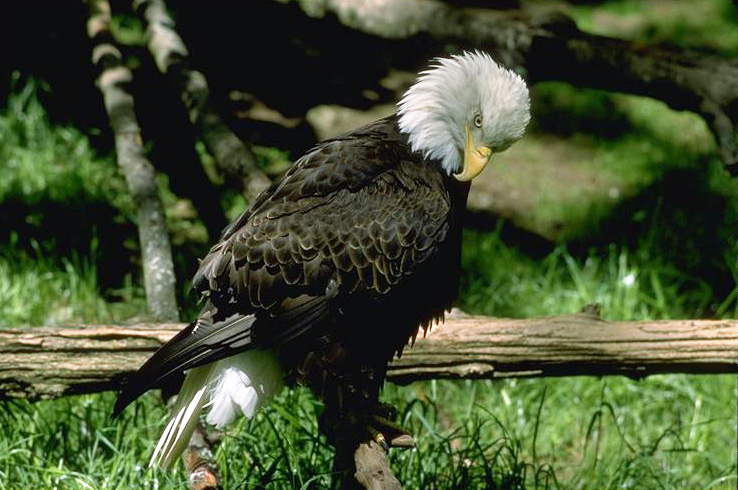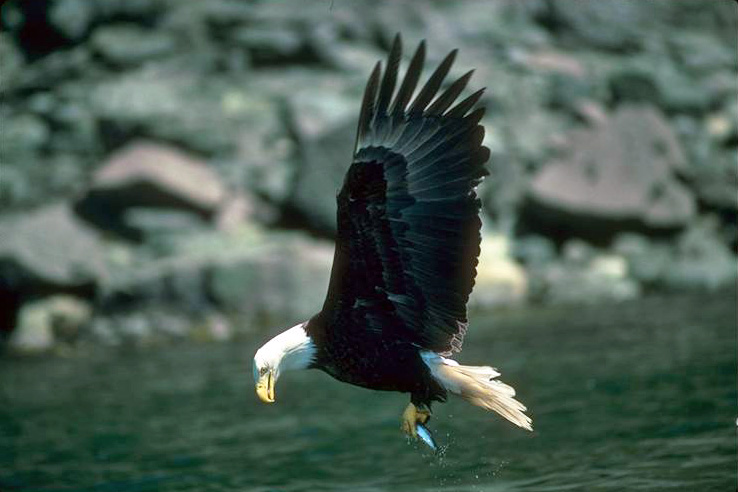
June 20 marks the day in American history when the bald eagle was designated as the nation’s symbol. In 1782, the bald eagle (Haliaeetus leucocephalus) was selected as the country’s emblem because of its regal appearance and vigor.
The bald eagle has  persisted through many hardships, much like the United States. The success of the bald eagle’s recovery is one of the most famous cases of conservation management. In 1940, the bald eagle was granted federal protection under the Bald and Golden Eagle Protection Act. For several decades later, it would be protected under more federal acts bringing its importance to the forefront of natural resource preservation. DDT, a synthetic pesticide known to thin eggshells and in turn kill bird embryos, was banned from use in the United States. The following year, the Endangered Species Act was passed and included the bald eagle as an endangered species. Around this time, the bald eagle population in the lower 48 states consisted of a shockingly low 417 breeding pairs. From then to the turn of the century, recovery plans for the bald eagle were put into place. In 2007, only 13 years ago, the bald eagle was removed from the Threatened and Endangered Species List due to the increase and stability of populations. At the time of delisting, survey data showed that the population had grown significantly to 9,789 breeding pairs.
The success and persistence of the bald eagle’s recovery parallels closely to the trials and tribulations of the United States. Even though the fight is far from over, we can take a step back and appreciate the hope these birds symbolize. During these trying times, we can all be inspired by the strength, perseverance, and success of the bald eagle.
To celebrate American Eagle Day, take a moment to learn more about the bald eagle. Have you seen one of these majestic birds in public? If you have been fortunate enough, make sure to report your observation through the Online Field Survey Form!