Science Spotlight

Subscribe

Receive Science Institute news by email.

    All Science Spotlight Articles

    rss

    The summer 2020 issue of the link opens in new windowCalifornia Fish and Wildlife Journal (PDF) is now online! This issue contains a number of excellent articles, including a couple on taxonomic groups that are often under-represented in the Journal — invertebrates and raptors.

    Raptors can provide a benefit to agriculture by reducing rodent populations, yet many croplands and pastures do not provide adequate perching structures needed by raptors to hunt effectively. In link opens in new windowA novel method using camera traps to record effectiveness of artificial perches for raptors (PDF), Clucas et. al report on a new method that allows for 24-hour monitoring of artificial perch utilization. The resulting high-resolution photos capture a variety of raptors landing, perching, and consuming prey. The authors report that their method can be easily used to study the effectiveness of hunting perches for raptors in agricultural areas.

    In link opens in new windowNotes on reproduction of Cascades frogs from California (PDF), Dr. Stephen Goldberg tackles the challenge of studying a nearly extinct species without collecting or euthanizing individuals. Using museum samples of 36 R. cascadae collected from 1954 to 1972 in Plumas County, Goldberg is able to gather and analyze tissue samples that document the timing of events in the frogs’ reproductive cycle. This data will prove useful in subsequent attempts to reestablish the species in its former range.

    Longcore et. al examines the habitats of another species in decline. link opens in new windowNearly all California monarch overwintering groves require non-native trees (PDF) provides a thoughtful analysis of a conservationist’s paradox: the critical need to preserve exotic trees—namely eucalyptus—to protect the preferred overwintering habitat of this iconic butterfly species.

    Dr. David Boughton provides a literature review of the striped bass in coastal California—a non-native species introduced in California in the late 1800s for sport fishing. link opens in new windowStriped Bass on the coast of California: a review (PDF) addresses three key questions: Where do Striped Bass occur on the California coast? (2) Do they comprise locally reproducing populations, strays from the Golden Gate, or both? and (3) What is the general scale or scope of their potential impact on coastal salmonid populations?

    Finally, Dr. Vernon C. Bleich (a past editor of the Journal) describes the presence of a species in an area that has not been previously reported in the scientific literature. link opens in new windowLocality records for Woodhouse’s toad: have wet washes in a dry desert led to extralimital occurrences of an adaptable anuran? (PDF) details the presence of Woodhouse’s toad in the Santa Rosa Mountains on the western edge of the Coachella Valley, and discusses the probable role of extreme weather events in expanding the geographic range of A. woodhousii in southeastern California.

    As it has for the past 105 years, our scientific journal – previously known as California Fish and Game – continues to publish high-quality, peer-reviewed science that contributes to the understanding and conservation of California’s wildlife. For more information and other back issues, please visit CDFW’s website.

    ###

    CDFW Photo

    Categories:   Science Spotlight

    VegCAMP staff researching at Carrizo Plain, San Luis Obispo County

    Three scientist standing on dry grass with mountains and blue sky
    VegCAMP staff working at Modoc Plateau, Modoc County

    Smoke from a smoldering fire in a dry field with mountains and clouds in the sky
    Lightning-caused fire witnessed by staff, Mono County

    map of Slinkard Valley Wildlife Area fire scale vegetation
    Slinkard Valley Wildlife Area vegetation map

    California is home to more than 6,500 plant species, which offer sustenance and shelter to more than 1,000 animal species (this figure doesn’t include invertebrates).

    In fact, part of the mission of the California Department of Fish and Wildlife (CDFW) is to manage the habitats upon which our fish and wildlife species depend. The cornerstone of those management efforts is knowledge of the plant assemblages that are unique to each habitat – where these natural communities are located, how prevalent (or rare) they are, and monitoring how their distribution may shrink or grow over time.

    CDFW has three vegetation ecologists (Rachelle Boul, Betsy Bultema and Jaime Ratchford), a geographic information systems (GIS) specialist (Rosie Yacoub) and a unit supervisor (Diana Hickson) dedicated to exactly that task. Known as the Vegetation Classification and Mapping Program (VegCAMP), this team works year-round to identify, record and map all of the natural communities (also known as vegetation types) that grow in California’s 163,000 square miles. VegCAMP also relies on the mapping expertise of four contracted employees, paid through an arrangement with California State University, Chico.

    According to Hickson, having a complete, reliable map of California’s vegetation is an invaluable scientific tool. “We need knowledge of where the vegetation is in order to make good management decisions, such as determining the best place to put a preserve, for example,” she says.

    VegCAMP tackles this task by sampling, classifying, defining, naming and mapping the natural communities of an area – such as the Suisun Marsh, Point Reyes, Western Riverside County or the Mojave Desert. Some mapping areas encompass an entire eco-region (the Mojave Desert mapping area, for example) while some are as small as a 2,000-acre ecological reserve.
    The process of classifying and mapping a CDFW property, for example, generally requires eight to 10 people to survey the property, taking detailed notes and pictures to describe the vegetation at different locations. The “boots on the ground” effort doesn’t have to cover every square inch, fortunately. The process requires collecting vegetation samples from a small portion of the mapping area (depending on the complexity), then extrapolating to determine the most likely makeup of the entire area. The data is then brought back to the office to be classified, and each location visited can be given a vegetation name. These locations on the ground are compared to aerial imagery and lines are drawn around each community type and labeled. Another measure of checks and balances is to have a second field crew survey known locations of each community, without having knowledge of the previously mapped attributes.

    All of this information is entered into the VegCAMP database, where classification software and GIS tools allow users to gain a tremendous understanding of what comprises a particular area. “One map contains many different attributes,” Hickson explains. “For example, we can query the polygons (each mapped ‘patch’) to show acreage of conifer types, and then we can narrow the search to those conifer types that are tall or short, those that are regenerating or those that have a shrub layer under them. That’s the power of GIS layers.”

    The data collected and recorded by the VegCAMP team has far-reaching implications, and is used by other agencies, nonprofits and partners as well.

    Seeing the practical application of their work is a satisfying payoff for Hickson and her crew. For example, the VegCAMP team spent several years meticulously mapping Mendocino County’s Pygmy Forest, which is dominated by a few conifer species that grow to a height of six feet or less, due to nutrient-poor soil that saturates in the winter and dries completely over the summer. Over time, the team produced a comprehensive map that showed how much vegetation had been lost to residential development and cannabis grows, as well has how much remained. 

    “As a result of our mapping, the county recognized the need to require more environmental assessment for proposals for development in that habitat,” Hickson explained. “It’s raised awareness of the vulnerability of that vegetation type.”

    Vegetation ecologist Rachelle Boul also finds satisfaction in her work with VegCAMP. Her mapping efforts have largely been focused in the Suisun Marsh area in Solano County. This highly managed area is home to rare species such as the salt marsh harvest mouse, and CDFW works with the California Department of Water Resources and private duck clubs to maintain habitat for them while also allowing access for duck hunting. Here, VegCAMP remapped the vegetation every three years in order to determine if there had been any negative impact.

    Boul noted the importance of aerial images, including those taken by satellite – VegCAMP has access to the photos taken by the US Department of Agriculture’s National Agriculture Imagery Program – and drones. “You can only make a vegetation map as good as the imagery that you interpret from. It’s just made it so much easier to be more accurate and more fine scale,” she said.
    Boul says that it’s the diversity of her duties – from field work to data analysis to mapping vegetation and finally sharing that data with CDFW partners – that keeps her motivated and passionate about her job.

    Being able to spend time in nature is certainly a perk for the VegCAMP ecologists but that’s not to say there aren’t job-related hazards. Both Hickson and Boul remember a particularly harrowing day in August 2017, when they were field mapping the Slinkard/Little Antelope Wildlife Area in Mono County, and a lightning strike touched off a fire. The VegCAMP team reported the fire immediately and were soon joined by CalFIRE helicopters and ground crews. Map-making took a back seat that day to field safety and group communication.

    Despite the size and length of the fire (nearly 9,000 acres and several days), it didn’t really impact the work of VegCAMP. Nerves may have been rattled, but fortunately nearly all of that mapping area (work still in draft form) was untouched by flames.

    ###

    Media Contact:
    Tim Daly, CDFW Communications, (916) 201-2958

    (CDFW Photos)

    Categories:   Science Spotlight

    bear in a tree with a tracking collar with the sun rays shining through the trees
    A collared bear near Blue Canyon in Placer County.

    For years, California Department of Fish and Wildlife scientists were trying to locate dens for California’s Sierra Nevada red fox — a rare and threatened species whose population has decreased substantially. Scientists had a general idea that some of the foxes denned at high elevations in the Lassen Peak area, but aside from vague descriptions written in the 1920s, the den locations had never been documented.

    In 2018, a team of scientists led by CDFW wildlife biologist Jennifer Carlson put GPS satellite collars on several Sierra Nevada Red Foxes. They were able to locate several dens in 2018 and 2019 and are in the process of verifying at least two more. Through collar technology and field work they have also verified that the population they were tracking has successfully raised litters.

    “Knowing basic information about where the foxes live and breed will help us develop conservation actions to benefit the species,” said Pete Figura, a CDFW wildlife management supervisor who has experience collaring many types of wildlife including deer, elk, Pacific fishers and band-tailed pigeons.

    The conservation benefits of collar technology have been well documented. Perhaps slightly less well known is that collars are designed and deployed with animal welfare in mind, allowing study animals to reproduce, get the food they need, maintain a healthy weight and live full lives.

    Scientists strive to use collars that weigh five percent or less of an animal’s body weight, and in some cases can use collars that weigh as little as one-and-a-half percent of an animal’s body weight. When possible, scientists use collars that feature a drop-off mechanism which releases the collar before its battery life runs out. The drop-off mechanism also ensures that the animal does not have to live the remainder of its life with an inactive collar. Drop-off collar technology isn’t yet available on some of the smallest collars but may be in the future. Biologists also use expandable collars for young animals that haven’t reached full size, allowing them to grow without being impeded by the collar.

    CDFW uses collars that provide two types of telemetry data. The data is derived from three basic approaches:

    1. Collars that send out a VHF radio signal which researchers can detect or listen to with an antenna to determine an animal’s general location and whether it is alive or dead. Researchers must be relatively close to detect the VHF signal.
    2. Collars that passively receive a radio signal from satellites and collect GPS location and other data such as movement and temperature. The data are usually stored onboard the unit which needs to be retrieved and downloaded onto a computer. Some of these collars also allow researchers to download data remotely using a hand-held device, but researchers must be relatively close to the animal. These collars also incorporate the VHF radio signal technology described above.
    3. Collars that also communicate actively to satellites allowing researchers to access location data on their computers and communicate with the collars to change settings remotely (e.g., to change the data collection schedule during migration).

    While CDFW collars many types of animals, ungulates (hooved mammals) are the largest group. At any given time, CDFW is collecting data from 500 or more collared ungulates across the state including deer, elk, pronghorn and bighorn sheep. The department collects data on collared ungulates for conservation purposes and to inform hunting limits. Scientists track movement, habitat use and survival and can collect data on everything from ambient temperature to the direction and speed the animal is traveling. Collars can also tell scientists when and where an animal has died and whether it is moving, feeding, or resting.

    “We take very seriously our ethical obligation not to harm animals or unnecessarily cause them discomfort. We take great strides to ensure collars have the right fit and weight for the animal wearing them,” said David Casady, a CDFW wildlife biologist with extensive collaring experience.

    Collars are typically made from foam and leather with a circuit board housed in strong metal or plastic casing. For data purposes, collars are designed so that the animal doesn’t behave differently than the rest of the population.

    “The data we collect from a collared animal needs to be representative of the population at large or it’s not very applicable to our management and conservation efforts,” said Casady.

    Data from collars allow CDFW to make well-informed, science-based management decisions. Although scientists in the field often have a solid understanding of the wildlife they research, thoroughly vetted data is what counts in the eyes of decision makers.

    Wildlife Biologist Justin Dellinger researches mountain lions (and wolves) for CDFW. He’s seen valuable data come from the 70 to 80 collared lions currently being monitored throughout the state.

    “With collared males that move around and look for new territory, data can show us where there’s a lack of habitat connectivity. We can use those data in developing movement corridors and road crossings. It can ultimately help our state’s lion population live full lives,” he said.

    Dellinger can also attest to the fact that collared lions are able to reproduce. “A 10-year-old female collared lion that we’re monitoring recently had her fifth litter of kittens,” he said.

    ###

    CDFW Photos. Top Photo: A collared deer at Bonita Meadows in Tulare County in 2017. The deer was collared as part of a long-term monitoring project.

    Media Contact:
    Ken Paglia, CDFW Communications, (916) 825-7120

    Categories:   Science Spotlight

    aerial view of a dirt road with a river running through a low area with blue skies in the background
    Drone images helped document damages and clean-up during the 2019 oil spill at Cymric Oil Field near Bakersfield

    five scientist in an open field with a target to take off and land the drone with snow capped mountains and blue sky in background
    CDFW drone pilots use foldable landing pads that work on multiple surface types—here during a drone mission in Inyo County

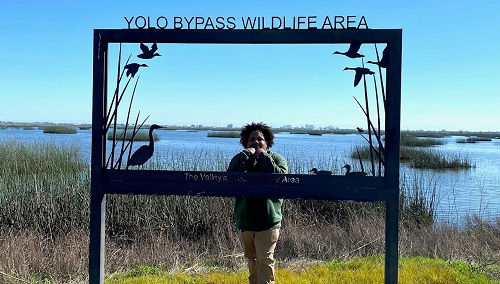
    In March 2019, there was late winter flooding at the Yolo Bypass Wildlife Area in Yolo County near Davis. Wildlife area supervisor Joe Hobbs wanted to check a series of old railroad trestle mounds to make sure there was no wildlife stranded there. In previous years when there had been flooding, staff went out on a boat to check the trestle mounds. But that approach had downsides: From a boat, it could be difficult to see exactly what was on the mounds, and the sound of the boat’s motor could potentially spook the animals.

    Hobbs saw an opportunity to utilize the California Department of Fish and Wildlife’s (CDFW) drone program, a service offered by CDFW’s Geographic Information Systems (GIS) Unit within the Biogeographic Data Branch. He submitted a project request which was ultimately granted.

    Drone footage showed two deer on one of the trestle mounds. A CDFW biologist did an assessment and concluded that the water was receding quickly, and the deer were not at risk of being stranded.

    “The drone was a great tool for getting the information we needed without causing stress to wildlife,” said Hobbs. “It was quiet and safe and gave us a view of the trestle mounds that we couldn’t get from the ground or in a boat.”

    CDFW’s drone program got its start in the early 2010s as GIS Program Manager Steve Goldman and others on the GIS team saw the technology becoming more affordable and useful. In 2014, Goldman put together a dedicated team within the GIS Unit to research policy and best practices. The program officially launched in 2016 when it received its Federal Aviation Administration authorization to fly.

    “Drones are very useful for natural resource management because they provide high-resolution aerial imagery and documentation of conditions on the ground in a timely, safe and cost-effective manner that is repeatable,” said Goldman, who also serves as CDFW’s Unmanned Aircraft System (UAS) Coordinator.

    Here are a few examples of CDFW drone missions:

    • In 2017, a drone was used to help scientists conduct a bighorn sheep population count outside of Bishop in Inyo County
    • Drone footage helped scientists survey portions of the America River in 2016 to find salmon redds, nests created by salmon in riverbeds where females lay their eggs.
    • As a permitting agency for legal cannabis grows in California, CDFW advises property owners on how to mitigate environmental damage. In 2019, the department used drone footage to assist the buyer of a cannabis property with assessing erosion damage caused by the previous property owner.
    • CDFW has historically partnered with other agencies to do pelican population counts using airplanes over the Tule Lake Wildlife Refuge, a national refuge near the Oregon border. In 2018, CDFW experimented with doing counts using drones to see if results could be achieved more safely and efficiently. Staff found that drones took higher quality images and could potentially yield more accurate counts. Staff also used the mission to assess the disturbance effect of drones and found no disturbance to wildlife.
    • CDFW’s Office of Spill Prevention and Response (OSPR) used drone footage in 2019 to document clean-up efforts in the nearly 800,000-gallon oil spill at Cymric Oil Field near Bakersfield. In March 2020, OSPR utilized drone footage to document clean-up efforts at a tanker truck spill in the Cuyama River in Santa Barbara County.

    Because CDFW’s mission is managing the state’s natural resources, the drone program puts considerable focus on minimizing the risk of wildlife disturbance. Before each mission, program staff consult with a biologist to assess the risk of disturbance. If there is any appreciable risk, a biologist accompanies staff on the mission to serve as a wildlife observer. CDFW’s drone program also has a working group to research and catalog disturbance effects by wildlife species. The group’s goal is to minimize wildlife disturbances and develop best practices.

    CDFW drone pilots have been fortunate enough to not have any major conflicts with wildlife. But there was one close call. In 2018, while on a training flight at the Yolo Bypass Wildlife Area, a raptor appeared to take interest in the drone. In these situations, pilots are trained to ascend above the bird to get away. Drones can ascend faster than birds of prey can and descend rather slowly.

    “The pilot noticed the raptor’s interest early, and at one point the raptor started to come at the drone. The pilot did exactly what he was trained to do – he ascended and got out of the raptor’s way. It wasn’t a dramatic incident, but it did validate our procedures and protocol,” said Goldman.

    CDFW has a fleet of 25 drones flown by 14 certified pilots. Additionally, 20 staff are working toward their drone certifications. The current growth is primarily within OSPR and within the Cannabis Lands Program. Certified staff flew 100 missions in 2019. Since the program’s launch, staff have amassed more than 1,800 flights and 300 plus hours of airtime.

    “We think we’ve only started to skim the surface of what’s possible with drones. We are excited to continue working with staff to find those opportunities to support our mission,” said Goldman.

    Only staff certified through the CDFW’s UAS program are authorized to operate a drone for department work. No personal drones may be used for department work.

    ### 

    CDFW Photos. Top Photo: Image from a drone mission at Sheepy Lake in Siskiyou County

    Media Contact:
    Ken Paglia, CDFW Communications, (916) 825-7120

    Categories:   Science Spotlight

    Biologist, Paul Divine releasing a bass fish back in to the lake off the side of a boat
    Paul Divine, Lassen County district fisheries biologist for CDFW, releases Largemouth Bass fry into Mountain Meadows Reservoir in 2018 as part of the effort to rebuild a trophy bass fishery that existed before the reservoir went dry in 2015.

    scientist hold a bass fish while on a boat on a lake with tall trees in background and blue sky above
    Former CDFW Scientific Aid Joshua Faughn holds up a chunky Largemouth Bass that turned up in one of CDFW’s electrofishing surveys of Mountain Meadows Reservoir. CDFW has electrofished the reservoir five times since water returned following the 2015 drought.

    biologist holding a small green and yellow pumpkinseed perch fish in his hands on a boat on a lake
    Pumpkinseed Sunfish have recolonized Mountain Meadows Reservoir on their own. Biologists believe they survived the drought and the reservoir going completely dry by holding out in one of the reservoir’s creek arms.

    Monty Currier’s heart sank when an excited angler told him recently of catching trophy-sized crappie at Mountain Meadows Reservoir in Lassen County.

    For the past five years, Currier, a California Department of Fish and Wildlife (CDFW) environmental scientist assigned to reservoir fisheries in the north state, has been working to rebuild the fishery at Mountain Meadows Reservoir after the Pacific Gas and Electric (PG&E) impoundment went dry in 2015 from the combined effects of maintenance work and the drought. Crappie were not part of the restoration plan.

    Currier’s spirits lifted when the angler pulled out his phone. The photos he proudly showed off were not of crappie – but rather of good-sized Sacramento Perch, California’s only native sunfish and the result of CDFW transplants from Biscar Reservoir in Lassen County, Lake Almanor in Plumas County and Clear Lake Reservoir in Modoc County.

    Anecdotal progress reports such as these have had to sustain Currier of late along with his CDFW colleagues Paul Divine, a district fisheries biologist for Lassen County, and Amber Mouser, who oversees fisheries issues in Plumas County and has worked closely on the Mountain Meadows Reservoir restoration. Plans to formally survey and electrofish Mountain Meadows Reservoir this past spring and next fall have been postponed as a result of COVID-19-related social distancing mandates preventing the work, which typically requires three people working in close proximity aboard an electrofishing boat.

    The unfortunate 2015 fish kill at Mountain Meadows Reservoir presented Currier with something of a dream opportunity.

    “It’s pretty special because you don’t often get the chance to start from scratch and build up a fishery,” he said. “It takes a lot of diligence, multiple agencies and groups working together to make things happen. There are a lot of moving parts.”

    In addition to Sacramento Perch, stocking largemouth bass and seasonal rainbow trout have also been part of the restoration efforts. But before any fish were introduced, CDFW added 600 fish habitat structures in 2016 consisting of brush piles and recycled Christmas trees to jump-start the habitat.

    Although Mountain Meadows Reservoir today brims with 5,800 acres surface feet of water, the lake is shallow – at no more than 15 or 16 feet at its deepest point – and heavily vegetated. It offers good habitat to support a self-sustaining largemouth bass fishery and a put-and-take recreational trout fishery in cold weather months. Prior to going dry in 2015, the reservoir offered a trophy largemouth bass fishery and hosted several tournaments and other fishing contests each year.

    Rebuilding the popular largemouth bass fishery began in earnest in 2017 with captured bass transplanted from Antelope Lake in Plumas County. In 2018, 2,000 fingerling largemouth bass were purchased from a private hatchery and stocked through the combined efforts of PG&E, the Mountain Meadows Conservancy, local anglers and community sponsors. Last year, largemouth bass were transplanted from Biscar Reservoir. Currier works with CDFW fish pathologists to ensure that the fish are disease-free and safe to translocate.

    A spring electrofishing survey would have provided insight on how many bass were now spawning in Mountain Meadows Reservoir. A fall survey would reveal how successful the spring spawning had been.

    The last time CDFW had a chance to monitor the recovery was in August of 2019 when two electrofishing boats sampled the western portion of the reservoir. The results were encouraging: 718 fish were captured, the highest catch overall compared to the four previous electrofishing surveys since the reservoir was rewatered.

    Fifty-six largemouth bass were captured last August, many being juveniles indicating natural spawning was occurring. Twenty-four Sacramento perch turned up – compared to just three of the fish captured in two previous surveys combined earlier in the year, though well below the 80 Sacramento perch captured in 2018.

    The most plentiful species of sport fish in the August 2019 survey was the pumpkinseed sunfish at 417. The pumpkinseed sunfish fishery is very popular at the reservoir, said Currier, and appears to be recovering without the aid of stocking or transplants from CDFW. Currier said the fish likely repopulated the reservoir from one of the creeks that feeds into it.

    Currier and CDFW biologists are particularly interested to see whether the pumpkinseed sunfish and Sacramento perch can co-exist over time. Native Sacramento perch, which evolved in the Sacramento-San Joaquin Delta prior to the introduction of non-native sunfish and other predatory species from the Midwest and East Coast, have trouble competing for food and habitat with more aggressive, non-native sunfish such as the pumpkinseed and crappie.

    Sacramento perch are an otherwise hardy and adaptable sport fish appreciated by anglers for their fine table fare. CDFW fisheries biologists are constantly on the lookout for suitable waters to expand their range, expose them to more anglers and ensure the species genetic diversity and survival.

    Overall, pumpkinseed sunfish accounted for 64 percent of the electrofishing catch in Mountain Meadows Reservoir from 2017 to 2019 compared to Sacramento perch that represented just 7.6 percent of the sampled fish. Three 2019 electrofishing surveys resulted in lower Sacramento perch numbers than in 2018, but CDFW scientists such as Currier note that Sacramento perch can be difficult to electrofish and net due to their dark coloration that makes them difficult to see and their tendency to hold in heavy cover. Other factors such as different water temperatures at the time of the surveys could explain some of the drop-off in Sacramento perch numbers from 2018.

    One hundred forty-three Sacramento perch were translocated to Mountain Meadows Reservoir from Biscar Reservoir as recently as June 2019 in an attempt to boost the breeding stock. That anglers are now catching Sacramento perch worth bragging about – even if they are sometimes mistaken as black crappie – is something Currier and his colleagues can take pride in for now.

    ###

    CDFW Photos. Top Photo: CDFW Environmental Scientist Monty Currier proudly shows off a Mountain Meadows Sacramento Perch, which CDFW introduced into the reservoir to provide an exciting sport fishery for local anglers.

    Media Contact:
    Peter Tira, CDFW Communications, (916) 215-3858.

    Categories:   Science Spotlight

    Hallprint, spaghetti-style fish tags provide visual identification for Feather River Fish Hatchery staff that returning salmon are spring-run Chinooks that can be used for spawning and perpetuating the run of fish.

    Spring run Chinook salmon receives a fish tag in the Feather River Fish Hatchery
    An early arrival to the Feather River Fish Hatchery receives a Hallprint, spaghetti style fish tag identifying it as a spring-run Chinook salmon before it is returned to the Feather River.

    Two Feather River Fish Hatchery employees sort and prepare spring run Chinook salmon for tagging
    Feather River Fish Hatchery staff prepare spring-run Chinook salmon for tagging before these early arrivals are returned to the Feather River.

    group of spring run Chinook salmon swim inside a holding tank within CDFW's Feather River Fish Hatchery in Butte County
    Spring-run Chinook salmon inside the Feather River Fish Hatchery.

    The California Department of Fish and Wildlife’s Feather River Fish Hatchery in Butte County recently completed the tagging of 2,746 spring-run Chinook salmon in May and June.

    The fish were early arrivals to the hatchery. After being outfitted with two external Hallprint, spaghetti-style fish tags on either side of their dorsal fin – two tags in case one comes out and is lost – the fish were returned to the Feather River. Unlike Passive Integrated Transponder (PIT) tags injected into many Chinook salmon smolts in order to monitor their movements, returns and hatcheries of origin, the external Hallprint tags are intended to provide visual identification to hatchery staff of returning spring-run Chinook salmon.

    In September and October, the hatchery will spawn spring-run Chinook salmon, selecting among only those returning, externally tagged fish as broodstock in order to preserve the integrity of the spring-run fish and not mix genes with returning fall-run Chinook salmon. The ladder to the Feather River Fish Hatchery was closed July 1 to ensure only the early arriving spring-run Chinook salmon were tagged.

    This process helps the hatchery achieve its goal of selecting and spawning salmon that represent the entire timeline of returning fish while keeping spring-run and fall-run salmon separated.

    Feather River spring-run Chinook salmon are classified as threatened under both the state and federal endangered species acts. Tagging and spawning efforts help mitigate their decline. The goal is to ensure these native California fish can be enjoyed by generations to come.

    CDFW Photos

    Categories:   Science Spotlight

    Isaac Chellman, high mountain lakes environmental scientist for CDFW’s North Central Region, nets non-native trout from a lake to restore native frog habitat.

    Sierra Nevada yellow-legged frog sits among the reeds in its high mountain lake environments with trees and blue sky in the background
    The Sierra Nevada yellow-legged frog is listed as a threatened species under both the California and federal endangered species acts.

    close up look of a Sierra Nevada yellow legged frog, which blends in well into its native, high mountain lake habitat. The frog is on a dark rock partially in a lake
    Non-native trout introduced into high mountain lakes prey upon native Sierra Nevada yellow-legged frog tadpoles and young frogs. Removing these trout from select lakes is an important step in recovering native frog populations.

    In the Tahoe National Forest, California Department of Fish and Wildlife scientists are working to balance native species restoration with recreational fishing.

    This summer, for the first time in the Tahoe National Forest, CDFW will begin work to restore Sierra Nevada yellow-legged frog (Rana sierrae) habitat by removing introduced trout from four alpine lakes and four small ponds within the Five Lakes Basin area. The Sierra Nevada yellow-legged frog is listed as threatened under California’s Endangered Species Act and endangered under the federal Endangered Species Act. 

    The Five Lakes Basin is located in Nevada County, south of French Lake and Faucherie Lake within the Grouse Ridge non-motorized area of the Tahoe National Forest. The area is a popular destination for backcountry recreation. The small lakes and ponds targeted for fish removal include Glacier Lake and are typically accessed from the Grouse Ridge Campground and Faucherie Lake.

    “These types of projects highlight CDFW’s dual mission to both provide recreational opportunities and recover native species,” said Sarah Mussulman, Sierra fisheries supervisor for CDFW’s North Central Region. “In this case, we want to ensure anglers have a chance to catch a fish at a beautiful lake while simultaneously ensuring this iconic native frog remains on the landscape for generations to come. Because the fish are a major driver of frog declines, we’ve chosen one area near Grouse Ridge to recover frogs and a nearby area to plant fish.”

    To remove the fish, which consist of non-native brook, rainbow and hybridized golden-rainbow trout, CDFW will use mechanical methods including monofilament gill nets and backpack electrofishing units. This project is funded by the U.S. Fish and Wildlife Service through its endangered species recovery grant program and will be conducted in collaboration with the Tahoe National Forest. Work is scheduled to begin by mid-summer and will continue through the fall 2022.

    The Sierra Nevada yellow-legged frog was once one of the most abundant species in the Sierra and a critical part of the natural food chain. Non-native trout, which were introduced into historically fishless lakes and ponds throughout the range for many decades, consume young frogs and tadpoles. This predation has been a major contributor to the decline of these native amphibians. The restoration project will provide additional fishless habitat, which is needed for the long-term survival and eventual recovery of this species.

    At the same time, CDFW is committed to promoting and maintaining the unique recreational fishing opportunities nearby. CDFW will continue to stock trout into many lakes in the Grouse Ridge area, including Carr, Culbertson, Feeley, Long, Milk, Upper and Lower Lindsey, Big and Little Island, and Lower and Upper Rock lakes. These locations provide fishing opportunities at beautiful, high elevation lakes within a few miles of the Five Lakes Basin.

    ###

    CDFW Photos

    Categories:   Science Spotlight

    CDFW is a department with about 1,200 employees in scientific classifications, spread from Yreka in the north to Blythe in the southeast. Their expertise spans a broad spectrum of subjects – wildlife management, fisheries management, marine issues, habitat conservation and restoration, veterinary science, pathology, genetics, invasive species and so much more.

    Coordinating the efforts of a department with such a wide range of specialties is no small task. But back in 2006, CDFW released its Strategic Initiative, which laid the groundwork to do just that. The document outlined the strategies and actions that the department should take in order to increase its effectiveness across the board. One specific goal was to expand the department’s scientific capacity – to establish best standards and practices, to improve access to scientific literature, and heighten visibility and awareness of scientific efforts.

    CDFW Science Institute was launched in May 2012 as the means to accomplish those goals. Initially, it was led by a team of dedicated scientist that put the Science Institute on the map with a public website, a scientific lecture series, science symposium, policy and guidance documents on scientific practice, and ultimately hiring a Science Institute Lead in 2018. Since then, the Institute has grown to include a committed scientific staff of five employees who work to support CDFW’s scientists and scientific efforts.

    CDFW’s Science Advisor and Science Institute Lead, Christina Sloop, points out that climate change and biodiversity conservation are two issues that affect all facets of the department -- yet specific resources on these topics are not readily available to many field staff. The Science Institute employs staff who are specifically trained to advise on these topics, and can provide a statewide, long-term perspective.

    “We are ready to provide guidance and help connect the dots when climate change or biodiversity conservation principles could be incorporated into a study or a project,” Sloop explains. “We play a departmentwide facilitation role, so CDFW’s scientists and scientific programs can better respond to these challenges and be as efficient as possible as they work to support our important mission.”

    CDFW recently published the link opens in new windowScience Institute Progress Report 2018-2019 (PDF), which highlights the tools developed so far. The 2020-2025 Science Institute Strategic Action Plan will be released this summer. This document reflects input from the CDFW science community and lays out goals and strategies to guide the Science Institute’s priority actions in the next five years. Each year, the plan will be reassessed, reevaluated and updated as necessary, in order to keep one step ahead of current challenges. “Our goal is to be proactive and anticipatory rather than reactionary,” Sloop said. “We’ll always be on the lookout for new ways to build capacity, promote transparency and foster scientific excellence.”

    ###

    Media Contact:
    Kirsten Macintyre, CDFW Communications, (916) 804-1714

    Categories:   Science Spotlight

    small gray bird with black beak, wings and chest, yellow head with mouth open in a tree with branches and leaves
    Hermit warblers spend much of their time in forest canopy. They are rarely seen but very vocal and easily heard. Photo by Dr. Brett Furnas.

    's arm holding a recording device to record songs of small gray birds
    Scientists record songs of hermit warblers and use the data for surveys that support conservation efforts. Photo by Russ Landers.

    illustration of drawn trees with musical notes
    Hermit warblers flee wildfires which ultimately creates opportunities for new birds to take over a habitat. This may explain why some areas have multiple mating dialects. Illustration by Sarah Noll..

    New research shows that fire history seems to be shaping the diversity of bird songs throughout the state. The new paper, published in leading bird journal The Auk: Ornithological Advances, addresses the diversity of song dialects sung by hermit warblers – birds which get their name because they are rarely seen and spend much of their time in forest canopy. They are, however, very vocal and easily heard.

    Interestingly, the paper’s lead author, CDFW Senior Environmental Scientist Dr. Brett Furnas, never set out to study the hermit warbler, which is a migratory songbird that breeds in California, Oregon and Washington.

    Dr. Furnas’ journey studying the bird began a decade ago while he and his colleagues were doing surveys on songbirds in northern California. They noticed that songs from one species of songbird – the hermit warbler – were so complex that it was difficult to identify the species.

    “We ultimately compiled a list of 35 different song dialects from the hermit warbler throughout California,” said Dr. Furnas

    The team also noted, as had been confirmed in prior research, that all of the hermit warblers’ songs in a particular area sounded the same -- and they believed those songs to be the males’ mating calls.

    “Females in that area were probably raised to recognize that one type of call. The males have to sing it perfectly,” said Dr. Furnas, noting that the birds do have a repertoire of other songs that males use to announce their territories to other males.

    Then the team made a surprising find: In some areas they surveyed, there was more than one mating dialect. For example, two males singing different mating songs.

    That finding led to Dr. Furnas’ hermit warbler research. He traveled throughout California and recorded and analyzed mating songs from more than 1,500 male hermit warblers during mating season, April through July, from 2009 to 2014.

    What appeared to be causing the mixing of songs, he found, was wildfires.

    “Hermit warblers are very sensitive to fire in the short term, and they typically abandon an area shortly after a fire. This creates a little bit of a vacuum, and other birds fill in that gap. The net result is that you get some areas with more than one dialect,” he said.

    The new study also provides the first comprehensive description of hermit warbler mating song variants throughout California.

    Results from the study have several uses:

    • Now that scientists have a library of the hermit warblers’ complex songs, they can use that data to better survey the hermit warblers and other species.
    • Although the hermit warbler is abundant in California, it does have some potential conservation concerns. In summer, the hermit warbler is only found in three states, and in Oregon and Washington the bird is hybridizing with a closely related but more aggressive species. One possible outcome is that California could ultimately be the only home to non-hybridized hermit warblers. The research could help with conservation efforts.
    • The findings could improve scientists’ understanding of how song diversity functions, helping them disentangle the complex relationships involved with biodiversity.

    Read Dr. Furnas’ paper “link opens in new tab or windowWildfires and Mass Effects of Dispersal Disrupt the Local Uniformity of Type 1 Songs of Hermit Warblers in California.”

    ###

    CDFW Photos: Top Photo: Hermit_1: Hermit warblers are a migratory songbird that breeds in California, Oregon and Washington. Photo by Dr. Brett Furnas.

    Media Contact:
    Ken Paglia, CDFW Communications, (916) 825-7120

    Categories:   Science Spotlight

    silver fish with green stripe on back with black dots in a net in a river with rocks
    Adult Coho: Adult Coho Salmon released in Salmon Creek, Marin Co. (CDFW photo by Manfred Kittel).

    redwood trees with creek and 6 scientist with nets and buckets looking for coho salmon fish with rocks and bushes and sun rays shining through the trees
    Redwood Creek: CDFW biologists searching for juvenile Coho Salmon in Redwood Creek in summer 2014.

    Coho salmon (Oncorhynchus kisutch), also known as silver salmon, have lived in California’s coastal watersheds for thousands of years. Today their populations have declined to just a fraction of historical levels, endangered by a wide range of factors. In Central California in particular, the situation is dire, with the species listed as endangered under both the state and federal Endangered Species Acts. Many populations are in danger of declining to the point of local extinction.

    Recognizing the recovery of Coho salmon in central California’s streams and rivers as a high priority, the California Department of Fish and Wildlife (CDFW) is collaborating with NOAA’s National Marine Fisheries Service (NMFS), the U.S. Army Corps of Engineers (USACE), and other partner agencies and non-governmental organizations to develop and implement recovery actions. The tricky part is that there is no one-size-fits-all approach to saving the species.

    Eric Larson, Fisheries Program Manager for CDFW’s Bay Delta Region, has monitored the decline of Coho on the Central Coast over the past three decades. As he sees it, an effective conservation strategy will do two things: prevent local extinction events, and implement specific recovery actions in streams that once functioned as Coho strongholds. “But,” says Larson, “each stream is a unique geographic and ecological system. In each watershed, any recovery actions -- including captive rearing and release efforts -- must be custom-tailored to that system to be successful.”

    To date, some of those custom-tailored approaches include the following:

    Captive breeding and monitoring (Sonoma County). Since 2001, CDFW has been working with NMFS, USACE and others to restore Coho populations in the Russian River basin in Sonoma County. A captive breeding program was developed at Warm Springs Hatchery, situated at Lake Sonoma Dam, to help re-establish populations in Russian River tributaries and other regional streams where Coho once flourished. The hatchery program relies on a genetically informed breeding matrix to minimize inbreeding and conserve genetic diversity. The program produces up to 200,000 Coho annually, which are released primarily as juveniles into tributaries of the Russian River and other streams, although some smolts and adults are also released in a few regional streams.

    Concurrently, scientists from the University of California Sea Grant and Sonoma Water have been link opens in new tab or window actively monitoring juvenile Coho and adults returning to the Russian River system since the hatchery program began. The number of adult Coho returning to the river each year to spawn has gradually increased from just a handful in 2009, to more than 700 in 2017-2018.

    Watershed restoration work and hatchery rearing of juveniles (Marin County). CDFW is collaborating with the National Park Service, USACE, State Parks and others to restore Coho salmon in Redwood Creek, which flows through the picturesque Muir Woods National Monument. The prolonged drought from 2013-2016, along with other factors, had brought Coho in Redwood Creek to the brink of local extinction, with fewer than 10 fish returning annually to the creek as adults to spawn.

    From 2014 to 2016, approximately 200 juvenile Coho per year were collected in Redwood Creek and taken to Warm Springs Hatchery for rearing. The young salmon were grown to adulthood in the hatchery and, as three-year-old fish, released back into Redwood Creek in the winters of 2016 to 2018 to spawn. Tissue samples taken from juvenile Coho in summer 2017 and genotyped at the NOAA Southwest Fisheries Science Center in Santa Cruz confirmed that several of the fish released as adults in winter 2016 had spawned successfully and contributed to the persistence of this population in Redwood Creek.

    Captive rearing (Mendocino County). Farther north, Coho populations are also declining in coastal watersheds such as the Garcia, Gualala and Navarro rivers. In recent years, the numbers of adult Coho returning to the Garcia and Navarro rivers have been below the threshold necessary to maintain viable populations, and no Coho have been detected in the Gualala River at all for several years. This low abundance raised concerns at CDFW and NMFS that without intervention, populations were likely headed towards local extinction.

    For this reason, CDFW, NMFS and other partners developed a population recovery plan similar to those used for restoring Coho in the Russian River and Redwood Creek. As a first step, approximately 200 juvenile Coho were collected in October 2018 and again in 2019 in the Garcia and Navarro Rivers and taken to Warm Springs Hatchery. There the juveniles are being reared in captivity under the watchful eye of experienced hatchery staff. Meanwhile, CDFW and NMFS are developing plans for release of these fish, preferably as adults, back into their natal streams to spawn naturally. Although the fish could hypothetically be spawned at the hatchery and their offspring released back into the Garcia River, this option is unlikely due to hatchery space limitations. Releasing the Coho as adults also has the advantage of providing the released mature fish with free mate choice and exposing their offspring to natural selective pressures from the earliest life stage. Importantly, appropriate monitoring activities, including genetic parentage analysis, will be implemented to evaluate the success of the fish releases over the coming years.
    The development and implementation of recovery programs, such as those outlined here, are urgently needed to conserve Central California coast coho salmon for future generations to enjoy and to make progress towards population recovery.

    You can read more about efforts to conserve California’s Coho in the following documents:

    CDFW Photos. Top Photo by Manfred Kittel. Warm Springs Hatchery, adjacent to Dry Creek. Picture taken from the top of Lake Sonoma Dam.

    ###

    Media Contact:
    Harry Morse, CDFW Communications, (208) 220-1169

    Categories:   Science Spotlight