The Klamath River is back in the news as juvenile salmon are turning up dead, and there are questions about parasites. Here’s what’s happening.
CDFW is working closely with our scientific colleagues at the U.S. Fish and Wildlife Service, Cal Poly Humboldt and Oregon State University to monitor Klamath River salmon and the impacts of the naturally occurring, microscopic C. Shasta parasite (short for Ceratonova shasta). This parasite is common in the Klamath and other Pacific Northwest rivers and its impact ebbs and flows with environmental conditions. Hot weather, warm water and low flows – conditions the Klamath is currently experiencing – can increase its prevalence.
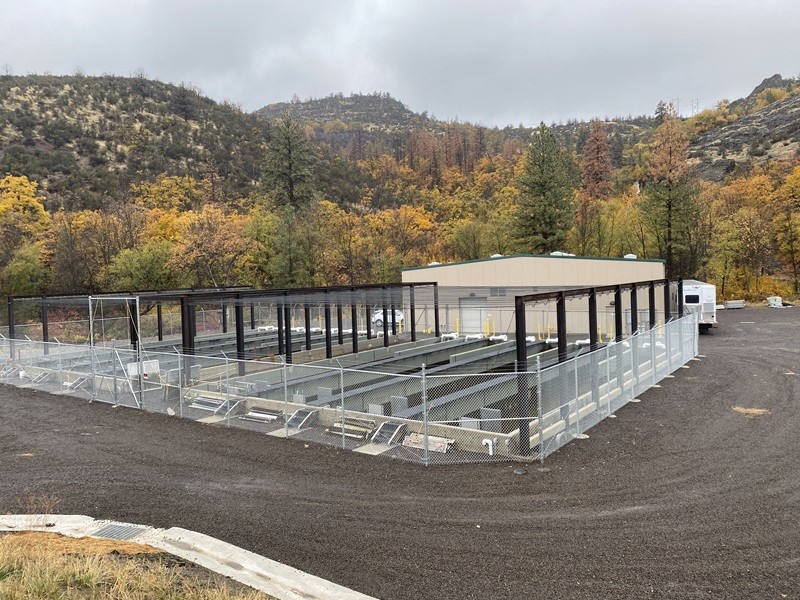
On the evening of May 14, CDFW’s Fall Creek Fish Hatchery released 675,000 certified pathogen-free Chinook salmon smolts into the Fall Creek tributary of the Klamath River about 7 miles upstream of the former Iron Gate Dam location.
The release was also timed when C. Shasta levels in the river had decreased and ahead of forecasted storms, which would improve water quality and accelerate the smolts’ outmigration to the Pacific Ocean. Since then, C. Shasta levels have increased and some of these hatchery fish have been found dead in monitoring traps upstream of the Interstate 5 bridge near the former Iron Gate Dam location. Lab results have confirmed the presence of C. Shasta and another parasite, Parvicapsula minbicornis, in these dead fish. CDFW continues to track the movement of hatchery fish and remains confident that a proportion of Fall Creek Fish Hatchery-origin salmon escaped the impacts of C. Shasta and other parasites.
Additionally, CDFW tributary monitoring of wild juvenile salmon populations indicates the majority of wild fish had already outmigrated ahead of elevated levels of C. Shasta. The C. Shasta parasite does not impact ocean salmon or ocean salmon fishing.
It’s important to understand that some mortality due to pathogens is expected and is a natural part of the salmon life cycle. A pair of Chinook salmon will typically produce around 4,000 offspring but even under ideal conditions, more than 99 percent of those offspring will succumb to pathogens or predation prior to reaching adulthood. While the C. Shasta levels in the Klamath are elevated and somewhat concerning, early spring C.Shasta levels were lower than levels seen in previous drought years prior to Klamath dam removal, and C.Shasta related mortalities in the spring of 2024 and 2025 following dam removal were significantly lower, which are encouraging signs for the future.
CDFW will continue to monitor and track basin-wide conditions through the Klamath Fish Health Assessment Team as adult salmon return to the Klamath River over the summer.
###
Media Contact:
Peter Tira, CDFW Communications, (916) 215-3858