Featured Scientist

Subscribe

Receive Science Institute news by email.

    All Featured Scientist Articles

    rss
    Kevin Kwak, with equipment in hand and on his back, prepares to electrofish a stream.

    Kevin Kwak prepares to electrofish a stream.

    Kevin Kwak shows off an impressive spiny lobster he caught diving.
    Kevin Kwak with an impressive spiny lobster he caught while diving.

    Kevin Kwak is a fisheries veterinarian for the California Department of Fish and Wildlife (CDFW) – one of only two fisheries veterinarians in the entire department. Kevin holds a doctorate degree in fish virology and a doctorate in veterinary medicine from UC Davis, where he also earned his undergraduate degree in evolution and ecology. Kevin joined CDFW in 2012 after working as a practicing veterinarian for a small animal and exotic animal clinic for a few years following his studies at UC Davis.

    Based out of CDFW’s Fish Health Lab in Rancho Cordova, Kevin’s work takes him throughout the state. His primary responsibility is diagnosing disease outbreaks and coordinating treatment plans at CDFW’s fish hatcheries. He also investigates wild fish population die-offs and conducts health assessments any time hatchery or wild fish are moved, relocated or rescued to ensure disease is not being introduced into new environments or spread to other fish populations.

    Most recently, Kevin developed an innovative treatment for hatchery Chinook salmon suffering from a Thiamine – or Vitamin B1 – deficiency, which is believed to be linked to salmon foraging to a large degree on anchovies in the ocean compared to a more diverse diet. A lack of Thiamine in returning female salmon causes developmental problems and even death in fry salmon. Kevin developed a method to treat the Thiamine deficiency at egg fertilization to avoid any developmental issues.

    Born and raised in the Los Angeles area, Kevin’s interest in science and the natural world was ignited as a child by the classic television series “Mutual of Omaha’s Wild Kingdom,” which he watched Sunday nights with his family.

    An avid hunter and angler, Kevin particularly enjoys free diving and SCUBA diving – especially for spiny lobster. He also keeps busy away from work introducing his two young children to these pursuits and the outdoors.

    CDFW Photos

    Categories:   Featured Scientist

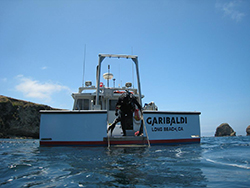
    Scuba diver standing on stern of boat called the Garibaldi from Long Beach California
    Travis preparing for an abalone survey dive, Catalina Island. Photo credit Derek Stein, CDFW
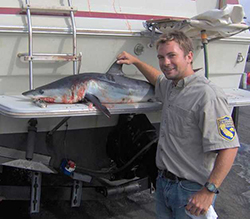
    Smiling man wearing khaki shirt with CDFW arm patch with hand on dorsal fin of small shark on stern of boat.
    Travis working on the California Recreational Fisheries Survey, San Diego. Photo courtesy of Travis Buck
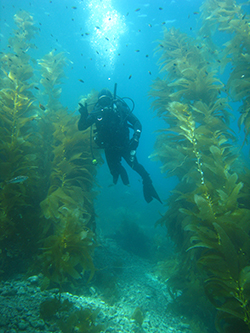
    Scuba diver underwater with kelp forest and small fish surrounding.
    Travis at a CDFW scientific diver recertification training, Catalina Island. Photo credit Colleen Wisniewski
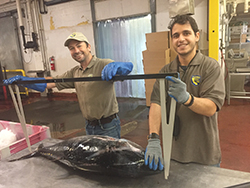
    Two smiling men wearing gloves holding up large calipers above large fish laying on table.
    Travis and Scientific Aid Nima Farchadi collecting Pacific Bluefin Tuna biological data, San Diego. Photo credit Erica Mills, CDFW

    Travis Buck is an environmental scientist with the CDFW Marine Region’s Highly Migratory Species and Ecosystem Management Project in San Diego. His primary responsibilities include data collection and analysis for highly migratory species and representing CDFW on the Pacific Fishery Management Council’s Ecosystem Workgroup.

    A Midwest native, Travis moved to California in 2003 after receiving a degree in Geography with an emphasis in Environmental Studies from Ohio University. He also completed Tropical Marine Ecology graduate level coursework in Florida and the Bahamas.

    What led you to a career in marine biology?

    I became fascinated with the ocean and the creatures that inhabit it at an early age. I remember my grandfather used to take me fishing in Florida and that was always very exciting. I especially liked the idea that you never knew what was on the end of your line until it surfaced, and so I began identifying fish as a kid on those trips. I was a big fan of aquariums too, and when I got a little older I became really interested in snorkeling, freediving and exploring reefs in Florida and the Bahamas. It seemed to be a more serene, foreign world, and I wanted to live closer to it and understand the life that existed within it.

    In school, I also excelled at math and science, so marine biology seemed like a natural fit. I have an aunt who jokes that I told her when I was five years old that I was going to be a marine biologist. She can’t believe I followed through with what I said at such a young age.

    What brought you to CDFW? What inspires you to stay?

    I began my career with CDFW in 2007 after three years as a contractor working on the California Recreational Fisheries Survey (CRFS). For the first 10 years of my career, I worked for the Marine Region’s Invertebrate Management Project, primarily on research and management of the spiny lobster fishery. I recently transferred to the Marine Region’s Highly Migratory Species and Ecosystem Management Project to expand my knowledge of marine fisheries.

    I think the mandate of CDFW is a pretty epic one, to ensure that California’s natural resources are there and are healthy for future generations. I can’t really think of a responsibility more noble than that. When I look back on the almost 15 years I’ve been associated with CDFW, it’s almost impossible to fathom how much I have learned, and also how much of the state I’ve been able to see through being employed here.

    What is a typical day at work like for you?

    It might be crunching numbers to track Pacific Bluefin Tuna landings (since they are managed with a quota), or it might be assisting scientific aids with dockside sampling questions, or it might be traveling out of state for a Pacific Fishery Management Council meeting, or a plethora of other duties. Issues with natural resources are dynamic and always changing, and so are the assignments at CDFW. I think most environmental scientists working for CDFW will tell you that there’s no such thing as a “typical day,” and that’s another reason that keeps me here, there’s not a lot of repetition of tasks. You’re constantly learning new skills.

    What is the best thing about your job?

    I love being at the forefront of marine-related research and being “in the know” about major issues affecting the ocean and its fisheries when sometimes the majority of the public aren’t even aware. And it’s not only about the major issues affecting the ocean, but also the cool discoveries. My job provides the opportunity to act as a messenger, to disseminate these cool discoveries, as well as important problems, to a wider audience.

    Diving at the Channel Islands over the years for CDFW, particularly the abalone surveys, provided some of the best memories I’ll ever have. Some of the things I saw underwater were so amazing and surreal. For instance, after one survey at Catalina Island, as we were slowly ascending to the boat, it started to rain. A school of barracuda were above us, and we could see raindrops breaking the ocean’s surface right above them while we hung out in the kelp forest for our safety stop. Scenes like that I’ll never forget. And all the people I’ve been able to meet and work with. Wow, it’s kind of mind-blowing looking back at how much information and how many people and places this type of work can expose you to.

    What is the accomplishment you’re most proud of?

    I’m proud of the work I did to successfully develop and manage the lobster report card program. Before lobster report cards, which gather data and are required for lobster fishing, we had no idea how large the recreational fishery was for lobster, or how much lobster that sector landed each year. Now we have a much better grasp on that information. Also, I’ve enjoyed writing two articles for Outdoor California magazine that detailed CDFW research on abalone and lobster. Writing is a passion of mine.

    I’m also proud of becoming a CDFW diver. I passed the entry examination with only the bare minimum number of required dives under my belt. It was very physical, with underwater breath-holding exercises in the ocean that are pretty difficult. I was pumped when I completed those.

    What interesting projects are you working on currently?

    I’m really interested in the work my project is doing with Pacific Bluefin Tuna. Not only do I track the total landings of this species in California, but we recently began collecting genetic samples of Pacific Bluefin Tuna landed in San Diego, which could give us further insight into the population being targeted by offshore fishing here. Pacific Bluefin Tuna were so heavily fished over the last century by other countries, the population is at a small fraction of its historic levels. There are real efforts being made at the international level to rebuild the population, however. That’s a good thing.

    If you had free reign and unlimited funding, what scientific project would you most like to do?

    I would organize a giant collaboration to better understand how the combination of warming ocean temperatures, increasing ocean acidification, and increasing hypoxia (like we are seeing take place around the world) will affect all of the commercially and recreationally important marine species off the U.S. West Coast. Humans need to know these things, so we can prepare for a rapidly changing world.

    Do you have any advice for people considering careers in science or natural resources?

    Work on your math and writing skills! There are a lot of numbers involved, and there is a lot of writing involved. Also, natural resource management actually involves managing people, since we are the ones exploiting the natural resources. So, work on your interpersonal skills – you’ll need them!

    Tell us something about yourself that people might be surprised to learn.

    I love surfing. I’m obsessed with everything about it! I’m convinced it’s the most beautiful, healthy and rewarding passion there is. I’ve also survived two boat crashes! Honestly, I have. Both were research trips, and neither was the fault of the researchers on board!

    CDFW Photos. Top Photo: Travis with a yellowtail, San Clemente Island. Photo courtesy of Travis Buck.

    Categories:   Featured Scientist

    Man wearing green jacket, sunglasses, and green camo ball cap holding long slime eels on boat on water
    Travis Tanaka on a boat sampling “slime eels”

    Man wearing purple shirt, camo hat, blue rubber gloves, and orange waders holding up large fish
    Travis holding a California Halibut

    Travis Tanaka is an environmental scientist with nearly two decades of experience working for CDFW. As a marine scientist with the Marine Region based out of the Monterey office, his primary responsibilities include monitoring the California halibut and Pacific hagfish fisheries, as well as collecting data to help manage their take.

    Where did you grow up?

    Paso Robles. Growing up in Paso really didn’t influence my future with CDFW or my choice to be a consumptive outdoor enthusiast. My influences came from my father and grandfather. My father taught me to be a hunter and responsible gun owner at a young age. My grandfather was a commercial fisherman and introduced me to fishing for various groundfish species. He taught me to appreciate our ocean’s resources.

    What led you to a career in marine biology?

    While going through school, I wanted to pursue a career in wildlife management or resource law enforcement. However, my path changed following a college lecture where the professor spoke candidly about upcoming job market opportunities and the future of what we might expect regarding job pursuits within the field of wildlife management. He said the reality was that we would find a lack of work in wildlife management, but that there would be upcoming needs in marine science. After that I began taking extra coursework in marine science and fisheries. Since I’d grown up fishing with my grandfather, I already had a vested interest in fisheries and so taking additional coursework was easy. I had to rethink my interest in resource law once I realized I wouldn’t be able to pass the vision exam.

    Tell us about your current research.

    I am a staff member on the Northern/Central California Finfish Research and Management Project where we monitor and conduct research on state-managed Finfish species (e.g. California halibut, surf perch, smelt and Pacific hagfish.) My role is to work on California halibut and Pacific hagfish.

    For halibut, I monitor the fishery within Monterey Bay. This includes sampling the Monterey area commercial hook-and-line fishery for length distribution and age composition. Early on, I used to go to recreational launch sites and sample the halibut catch from sport anglers. The California Recreational Fisheries Survey (CRFS) program has a great handle on the recreational fishery now, so I put my focus on the commercial end. I also lead the processing for all halibut otoliths our project collects through sampling for ageing. Otoliths, also known as ear bones, are a hard, bony structure important to the fish’s sensory system. Each year, the fish will add a layer, similar to tree rings. I am one of two readers of all halibut otoliths sampled by CDFW staff. To date, we have aged 4,000 California halibut. This age-at-length dataset is one of several datasets that were incorporated into our latest stock assessment. Our project has been collecting halibut data since 2007.

    In 2008, I began sampling the hagfish fishery out of Moss Landing to monitor and increase our knowledge of this remerging fishery. I developed a count-per-pound metric to sample live hagfish at the dock. Live hagfish are impossible to measure due to their movement and slime production. Hagfish can’t be sexed externally. To get an estimate of average weight or size, we randomly fill a bucket with hagfish, weigh the bucket and then count back the contents. If this is done repeatedly throughout the tank, we can develop an estimate for average weight. If the average count number goes up, then the fish are smaller per count, and vice versa. The ideal count is around four fish per pound, based on market demand. We then document the average size of retained hagfish and collect life history information, as well as information on the market and its participants.

    During a short period in the early 1990s, the Pacific hagfish fishery in California flourished to satisfy an export market for hagfish skins where they were used to create expensive leather-like products, such as boots, bags, wallets and purses. However, a market-induced crash later occurred, and the fishery went dormant. But by 2007, a renewed market demand emerged for the harvest of live hagfish for use as human food.

    Part of my job also involves working with fishermen interested in designing new harvest gear. Recently, I worked with fishermen who wanted to use barrels as a new trap type for the take of hagfish. After the fishermen secured experimental gear permits, our project evaluated their new gear design. With assistance from a colleague, we performed the necessary observation trips to collect data on interactions and bycatch. At the same time, we also collected lab samples to document sex ratios and the spawning maturity of hagfish caught by these traps. Once all of the results were in, we approved their new trap type that will improve quality-of-catch, reduce the number of traps on the seafloor, and ultimately be a viable option to existing trap gear.

    What are Pacific hagfish?

    Pacific hagfish are primitive, spineless, deep-sea fish that lack jaws, true eyes or a stomach. They live in muddy sea floors. Hagfish dine by scavenging dead or dying fish and marine mammals. They enter their prey through any existing hole or orifice they can find, or by creating a new hole via their two pairs of rasping jaws. Once inside, they tear the flesh from the carcasses as they devour their prey from the inside out. When stressed, their defensive mechanism is to overwhelm any prospective predators by exuding a thick viscous slime. This behavior is the reason hagfish are commonly called “slime eels.” Today, Pacific hagfish are caught and sold for human food, and much of the harvest is shipped to markets overseas.

    What is a typical day like for you at work?

    It depends on if my work day is during my field season or not. My halibut field season runs approximately May-October. Hagfish work is year-round but is significantly slower in the winter. During the field season, halibut sampling occurs in the morning and then I spend the afternoons in the office editing commercial fishing receipts, entering data, or processing halibut otoliths for ageing. Local hagfish sampling occurs in the morning. Once per month I travel to Morro Bay and Port San Luis to sample the Pacific hagfish fisheries in those ports. During the halibut off season, the average day is spent in the office working on the backlog of halibut otoliths, keeping up with landing receipt editing or addressing any pending issues. I spend a significant amount of time answering questions from commercial fishermen and recreational anglers.

    What is the most challenging aspect of your job?

    The most challenging aspect of the job, for me and for many others in CDFW, is balancing the needs of the resources (halibut and hagfish) with the needs of those people that use it. Within the group that utilize a fishery, there are often conflicts due to allocation between the recreational and commercial sectors (although not for hagfish, for which there is no recreational fishery). Thus, I am required to spend a significant amount of time answering questions from commercial fishermen and recreational anglers over a broad range of marine resources questions. As a CDFW environmental scientist, I must consider and balance the ramifications and consequences (biological, economic, social) of regulations and management actions.

    Tell us something about yourself that many people would be surprised to learn.

    It’s not really a surprise, but if I were not a CDFW scientist, I would be working as a commercial fishermen and hunting guide. I have also created some fishing tutorial videos on “Recreational Crabbing” and “Rockfish and Lingcod Fishing Tips and Tricks.” All are now posted on CDFW’s website and have nearly 40,000 views!

    Media contact: Carrie Wilson, Communications, (831) 649-7191

    Photos courtesy of Travis Tanaka. Top Photo: Travis sampling "slime eels".

    Categories:   Featured Scientist

    Young woman in diving suit smiling and leaning on the starboard side of a powerboat overlooking kelp-filled bay
    Christy prepares for a day’s work underwater at La Jolla.

    Diver underwater in black diving suite taking notes surrounded by kelp and sea urchins. White calipers in us, gripping a sea urchin
    Christy Juhasz works on an abalone density survey off the northern California coast.

    CDFW Environmental Scientist Christy Juhasz works for the Marine Region’s Invertebrate Management Project, where she is primarily responsible for managing California’s Dungeness crab fisheries. Christy coordinates preseason quality and domoic acid testing for the commercial fishery, summarizes seasonal landings data and works on rulemaking proposals for both the commercial and recreational Dungeness fisheries.

    A Southern California native, Christy earned a bachelor’s degree in marine biology, with a minor in oceanography, from the University of California, Los Angeles. Soon after graduating, Christy’s first paid position involved monitoring and trapping the invasive European green crab in several northern California bays and estuaries. Afterwards, she began working for CDFW as a scientific aid at the Shellfish Health Laboratory, located at the Bodega Marine Laboratory in Bodega Bay, where she spent several years testing quality control measures of a sabellid, polychaete worm that had been introduced at aquaculture facilities.

    In 2007, she became a certified CDFW diver and began assisting in abalone density surveys conducted on the Sonoma and Mendocino coasts. In 2011, she was hired in her current position to work on Dungeness crab fisheries management.

    What led you to a career in marine biology?

    As a child, I spent an inordinate amount at the coast and particularly enjoyed exploring tidepools. I was always fascinated by the creatures that eke out an existence on the water’s edge, fostering my love of marine invertebrate species. This only grew after taking an invertebrate taxonomy course, becoming certified in scientific diving and volunteering at a small, local marine aquarium while in college where I was able to share my love of native California marine life with the public.

    Not many people can say they get to dive as part of their job duties. What’s that like?

    Before coming to work at CDFW, most of my diving experience was in the warmer waters of Southern California and the Bahamas for training and research, respectively. Diving in the colder and rougher northern California ocean waters has been interesting. My job has taken me to some beautiful underwater habitat where diverse and colorful kelps, invertebrates and rockfish species abound, while also making me a much better diver.

    One interesting CDFW dive location includes the site of Mavericks, although not at the height of the surfing season. We were there to assess the red abalone population within the Marine Protected Area and I was able to observe firsthand the effects of the intense wave action that had eroded away the subtidal rocky reef promontories.

    How frequently do you get to dive?

    Recently, I had my first child so have not been able to get back underwater as intensely since before I was pregnant. Prior to this, I was an active CDFW diver, primarily assisting with monitoring red abalone populations in the summer months. Diving and field work, in general, are always fun to go out and do in coastal locations, but they do require a lot of planning and preparation. Actual collection of data while SCUBA diving really teaches you to be in the moment, as you have multiple tasks to complete underwater. Obviously safety is paramount and you have to pay attention to the air you consume while you’re working, which ultimately limits the amount time you have underwater.

    Today, most of your work relates to Dungeness crab. What do you find interesting about this particular fishery?

    The Dungeness crab commercial fishery is one of California’s highest valued fisheries and is also one of the state’s oldest fisheries. In fact, regulations governing take of legal-sized males around a set seasonal period date back to the turn of the 20th century, and are known as the 3-S management principle (sex, size and season). The fishery does widely fluctuate from season to season, but with California landings dating back to just over 100 seasons, there have been no observable, long-term crashes in catch history. In recent seasons, the fishery has experienced some record landings in both management areas of the fishery, especially in the central region, which in the past decades rarely contributed to the majority of statewide landings.

    I enjoy and thrive in my job under the dynamic and varying responsibilities and tasks that support the operations of the fishery. Whether I’m working on rulemaking packages, meeting with constituents for various issues or incorporating new or more extensive sampling procedures – it’s all very interesting.

    Do you work with species other than Dungeness crab?

    Yes. Some of my monitoring and rulemaking work involves other invertebrate fisheries in California, which have been increasing in importance (see link to journal article below). This raises new challenges for fisheries managers, especially considering the many invertebrate fisheries we oversee and the various life history strategies characteristic of each species.

    For instance, red urchin and red abalone have to be relatively near one another for successful fertilization after they release their gametes into the water column. This is in contrast to Dungeness crab, which mate during the period when females molt, and brood eggs before they hatch. These differences just reveal how each fishery requires a unique set of regulations to effectively manage them.

    What is the most rewarding project that you’ve worked on for CDFW?

    I have been collaborating with other CDFW staff to monitor the arrival of the Dungeness crab megalopae – that’s the last pelagic, larval stage of crabs before they molt and settle to the bottom as juveniles – to California’s bays and estuaries. The study aims to determine if there is link between their relative number and size, and perhaps predict commercial catch three to four years later, which is about when these crabs would grow into the fishery. Work on this is still preliminary, but in the time we have been observing, we have noticed big differences in total numbers and average size. This may be driven by optimal ocean conditions since the planktonic larval stages spend an average of four months total in the water column during the winter and spring months.

    I’m also involved in the rulemaking process for the Dungeness crab commercial fishery. One current development is the creation of a formal statewide program for incentivizing the retrieval of lost and abandoned Dungeness crab traps at the end of each season. The fishery has rules in place such as the use of a destruct device that wears away, to allow escapement and prevent a lost or abandoned trap from continuously capturing organisms. However, traps attached to a buoy with vertical lines in the water column that remain in the water past the season pose additional hazards to marine life and vessel traffic. The industry has been piloting local programs for the past several seasons. A formal program is expected to be in place by the end of the 2018-19 season.

    Recent seasons of the Dungeness crab fishery have been plagued by high domoic acid levels and low quality, leading to season delays. How has this changed the nature of your work?

    The pre-season quality testing has been conducted for the northern portion of the fishery for many years in concert with Washington and Oregon testing. Although procedures have been modified over the years, the scheduled delays are built into the current operations of the fishery. The fishery cannot be delayed due to quality issues past January 15, whereas with domoic acid season delays are unpredictable.

    Our efforts to monitor Dungeness crab are more extensive before the start of the season. Dungeness crab fishermen are key players in this task, as I call and email with them to collect and retrieve samples throughout the fishery’s range statewide (this is similar to how the quality testing is conducted as well). I also coordinate with staff from the California of Department of Public Health to ensure that samples collected are properly received by their laboratory testing facility. During the 2015-16 delayed season, CDFW staff worked tirelessly on this sampling effort while navigating the problem under current regulations and effectively communicating the latest information on the status of the delay and potential opening of the season. This was especially important in light of lost revenue due to the unforeseen delays.

    Do you expect that domoic acid will continue to be a problem in future seasons?

    Domoic acid is a neurotoxin produced by a unicellular algal organisms that thrive in warm water. The domoic acid problem that caused the severe delay of the 2015-16 season was thought to be a direct effect of the anomalous (unusual) ocean warming from the “warm blob” that developed off of US West Coast in 2014. As these anomalous warming ocean conditions persist, so does the problem of harmful algal blooms that cause domoic acid. This has become a top priority for discussion between industry, the Dungeness crab task force and other affected fisheries and agencies. 

    CDFW Photos. Top Photo: Christy measuring a dungeness crab.

    For Further Reading:

    Categories:   Featured Scientist

    a woman wearing a green, thermal jumpsuit stands in shallow water, pulling a fish net from the marsh
    Stacy Sherman conducts fish sampling at Liberty Island in the north Delta.

    a man and a woman pose for a selfie
    Stacy and her husband, Marcus, a biology teacher at Stockton’s Stagg High School.

    a woman holding a black labrador retriever poses with three young boys, with Emerald Bay behind them
    Stacy and her three stepsons – Owen, Jack and Charlie – pause for a photo overlooking Lake Tahoe.

    Stacy Sherman is an environmental program manager based in the Bay-Delta Region’s Stockton Field Office. She heads CDFW’s Fish Restoration Program Monitoring Team, a group of eight scientists and staff charged with one specific but important task: monitoring and supporting efforts to restore 8,000 acres of the Sacramento-San Joaquin Delta and Suisun Marsh to tidal wetlands.

    The restoration was mandated in 2008 by the U.S. Fish and Wildlife Service to help at-risk fish populations in the Delta as a condition of operating the Central Valley and State Water Projects, which send water to the Central Valley and southern California.

    Stacy joined CDFW in 2014 from the University of the Pacific in Stockton where she was an assistant professor of biology for seven years. She was born in Nebraska but raised in Baton Rouge, La. She holds a bachelor’s degree in zoology from Louisiana State University and a Ph.D. in marine biology and fisheries from the University of Miami, where she studied billfish larvae – baby sailfish and marlin – for her dissertation.

    Fill us in on the Delta restoration efforts. Where are we in meeting the goal of restoring 8,000 acres to tidal wetlands?

    It’s all in the pre-project planning phase. There are a lot of moving parts. The Department of Water Resources (DWR) is the lead agency and it’s DWR’s responsibility to actually do the restoration. Our team is relatively new. We exist to determine whether the restoration is effective and to provide the biological expertise.

    DWR has acquired several sites. These are all on public land or properties purchased from willing sellers. Prospect Island in Solano County is one. Bradmoor Island is another. Many already have some marshy areas. DWR will dig out some more and punch some holes in the levees. The first project will probably be breached next year.

    What’s so important about making these lands accessible to the tides and tidal influence?

    Back before the Gold Rush, all of the Delta was wetland. After the land was reclaimed, we lost something like 97 percent of the marsh. The idea is that the tidal marsh is incredibly productive and our changes to it probably affected the food web. So the requirement to restore so much acreage to tidal wetlands is to increase the availability of food and habitat for listed fish species, particularly the Delta smelt but also salmon. When I talk about it publicly, I try to bring people back to what was here in the past and how productive it is and how a healthy environment is good for everyone.

    Did you develop your passion and expertise in wetlands growing up and going to school in Louisiana?

    I spent a lot of time on the water growing up, but not necessarily the marsh – mostly lakes. My family started going to this one little lake outside of Baton Rouge when I was like 4. It’s called False River and it’s an oxbow lake off the Mississippi River. We sailed and fished and swam there all the time.

    When I was in college, I did some undergraduate research on the coast in the marsh. And my post-doctorate work is all in the marsh. That was actually in South Carolina.

    What brought you to California and CDFW?

    I decided to try the academic track and ended up in Stockton at the University of the Pacific teaching biology. The university is heavily skewed toward pre-dental and pharmacy so it wasn’t a great fit for me.

    One of my former master’s students, Phillip Poirier, who is now my colleague here in the office, sent me this job ad and said, “Do you know anyone who would like to apply for this?” And I said, “That sounds really nice. I will apply for it.”

    What do you enjoy most about your job?

    I really enjoy getting together with smart people here who care about the estuary and want to see it improved. I get the chance to work with people within CDFW and across other agencies, nonprofits, consulting firms, and it’s really nice to see people working together toward the same goal. We might have differences of opinions but we are all trying to get to the same place.

    California’s education leaders are concerned about the lack of girls and young women studying science and pursuing science and technology careers. Do you have any advice for them?

    I think the key for any kid is to get them engaged, get them outside. Don’t give them answers. Give them a chance to work things out – some of the inquiry-based science.

    My husband actually teaches high school biology at Stagg High School in Stockton and we talk about this a lot. He takes his students out to the Calaveras River, which runs right through Stockton. Experiences like that for me – hands-on, getting outside, answering questions, being able to be creative – is what made this field really attractive.

    When I was in middle school, the public school I attended offered marine biology and that was my first time to a marine lab and an overnight field trip. And then at LSU, I had all of these great field experiences and a really great ichthyology professor who kind of nudged me and encouraged me along the way.

    You have a unique perspective as an educator and now as a CDFW manager trying to hire scientists. Are universities doing enough to prepare the next generation of natural resource scientists?

    I think it’s variable. There are places that do have strong programs that really do prepare students well. I’ve had some amazing staff. We had a scientific aide here, Sunny Lee, who graduated from UC Santa Barbara and he came in with just so many skills – good writing and he already knew a bunch of invertebrates. He caught on to our process really quickly so that was great. On the other hand, you see applications from those who graduated with a degree in environmental studies – environmental science majors even – who say, “This will be a really great job for me. I really want to do this and get outside.” And I don’t think some of those applicants necessarily grasp the rigor involved – that this is serious science and it’s not just playing around outside.

    What advice would you give a young person thinking about a career in natural resources?

    Talk to people in the field before you make a decision about your school or the program you want to study. Go out and volunteer if you can. Make contacts. I would recommend they pay a lot of attention to math and statistics especially. Get used to working hard. Be the hardest worker in the room as that’s what’s going to get you along.

    Tell us something about yourself many people would be surprised to learn.

    Most people are surprised to find out I’m part Cajun. My mom is Cajun. I get a lot of questions about my lack of accent.

    All photos courtesy of Stacy Sherman

    Categories:   Featured Scientist