Featured Scientist

Subscribe

Receive Science Institute news by email.

    All Featured Scientist Articles

    rss
    Roberts doing camera checks at the Chorro study area in the Central Region

    Roberts doing camera checks at the Chorro study area in the Central Region

    A female bobcat trapped as part of a statewide population study
    A female bobcat trapped as part of a statewide population study

    Roberts checking bobcat traps on an ATV in the Inland Deserts Region
    Roberts checking bobcat traps on an ATV in the Inland Deserts Region

    Roberts setting up a bobcat trap at the Fort Irwin study area in the Inland Deserts Region
    Roberts setting up a bobcat trap at the Fort Irwin study area in the Inland Deserts Region

    Senior Environmental Scientist Rachel Roberts oversees CDFW’s statewide project to study the population of bobcats in California. The study will inform management practices and help scientists better understand conflict management issues between bobcats and humans. The research will ultimately culminate in the creation of a statewide bobcat management plan. Roberts was educated at San Jose State University where she earned both an undergraduate degree and a master’s degree in ecology and conservation biology with an emphasis in zoology. In 2011, she volunteered to do habitat restoration work at Pinnacles National Park in Central California. Her volunteer work led to a job as a scientific aide working with condors at the national park. Since that first volunteer position Rachel has worked for the U.S. Forest Service on both the Modoc and the Sierra National Forest, as well as for the California Department of Transportation as an environmental planner. She also worked in the private sector as an independent contractor and at an environmental firm before being hired by CDFW in 2020 as the department’s statewide bobcat research coordinator.

    When did you know you wanted a career involving wildlife?

    My dad used to take my siblings and me camping all the time, and we spent a lot of time in nature. But the “aha” moment didn’t come to me until later in life. I was a veterinary technician for a long time. I originally thought I wanted to go to veterinary school, but then I realized I wanted to work outside with animals. This was around 2005 and I was still early in my college career. I was trying to figure out what to do next and my now-husband suggested ecology as a major. Once I got into field classes and was learning more about wildlife biology, that was it. I figured out where I wanted to be.

    What inspired you to study bobcats?

    As a student at San Jose State, we did fieldwork at Cañada de los Osos Ecological Reserve near Gilroy. We’d go out to the reserve on a regular basis, and we’d see bobcats all the time. Bobcats are said to be elusive and shy around humans. They did generally try to avoid us, but I also noticed that they would sit there and watch us while we did fieldwork. They were often as curious about us as we were about them. Seeing so many bobcats on a regular basis is ultimately what led to my master’s thesis. I studied what bobcats were eating at Cañada de los Osos Ecological Reserve and how those prey items were changing seasonally. My love for bobcats has grown as I’ve studied them.

    What were bobcats eating at the reserve?

    Mostly dusky footed woodrats (Neotoma fuscipes), Botta’s pocket gopher (Thomomys bottae) and California meadow voles (Microtus californicus). Interestingly, they were eating more woodrats in the summer, pocket gophers in the winter and voles in the spring. They were also eating small mammals like field mice and deer mice, and birds like quail, northern flicker, turkeys and jays. At times their diet also included Jerusalem crickets, skunks, hares, snakes and lizards.

    What is your job like on a day-to-day basis?

    The research project is fairly complex. We have a team of bobcat scientists in each of the six CDFW terrestrial regions across the state collecting data. We have a large grid of camera traps that we are rotating through each of our 48 study areas, and we’re walking 40 kilometers of transects in each study area to collect scat for fecal DNA analysis. We are also deploying GPS collars on bobcats throughout the state. In addition to regional staff, there are multiple leadership groups that help the team make decisions. So my day-to-day involves coordinating the entire effort.

    For the first part of the project, I spent a lot of time in the field making sure staff were trained to collect data. I'm currently overseeing the bobcat collaring efforts, but as data collection starts to wind down by the end of June 2022 I’ll be spending more time doing data analysis and writing.

    What’s your favorite part of the job?

    I could give the obvious answers like working with bobcats and seeing all the great bobcat photos. But beyond that, the team of folks that have been hired to do this research are incredible. My favorite part is working with the young scientists. I’ve been really impressed with their data collection and organizational skills. They’ve been a pleasure to work with and we’re working together to achieve a common goal.

    What’s the biggest challenge of your job?

    Collecting and organizing data on a statewide scale is very challenging. We have various methods of data collection and management which makes the process easier but ensuring that the data is collected the same way across the state has been a challenge.

    What advice do you have for young people who are interested in wildlife careers?

    What helped me was all the volunteer work I did. I really wanted as much experience as I could get. I was willing to volunteer, work for little pay, or travel to get that experience. Putting myself in a place to be the person who takes on responsibility was key. I always put my hand up when something needed to be done, and I think that gave me the experience I needed to get here.

    Categories:   Featured Scientist
    Scientist, Whitney Albright standing on the river bank next to a boat with a life jacket

    Whitney at the San Joaquin River by the Friant Dam during a visit with CDFW staff.

    Two scientists with smiling faces in a crab cut out
    Whitney and Christina Sloop during a visit to the Bodega Bay Marine Laboratory.

    Two scientists in a pop up tent learning about salmon
    Whitney learning about the Central Valley spring-run Chinook salmon spawning process at the San Joaquin Hatchery.

    Four scientists standing on a mountain with mountains and cloudy sky in back ground
    Whitney with fellow members of the Science Institute team during a strategic planning retreat at Pepperwood Preserve.

    Whitney Albright is CDFW’s Climate Change Specialist and member of the department’s Science Institute. Growing up in Houston, where severe storms and hurricanes are common, she had an early fascination with weather. That led to a degree in Meteorology from the University of Oklahoma where she was able to take advantage of world-class weather technology and research.

    Whitney changed tracks slightly for grad school and studied forestry at the University of Washington, though still with an interest in climate and weather, focusing on the impacts of climate change on trees in the Pacific Northwest. Soon after earning her master’s degree, she saw a job announcement for a climate position with CDFW, and it was a perfect fit. She has been in her current position, based in the Sacramento headquarters since 2013.

    What exactly is your role as Climate Change Specialist?

    As Climate Change Specialist, I help identify climate change-related risks to the department’s mission and the resources that we manage, and develop strategies, initiatives and projects that will address and minimize those risks going forward. Much of what I do internally is look for opportunities to address climate risks within our various programs and activities and increase cross-program communication about climate change. I also develop and disseminate materials to support and empower staff to incorporate climate science and adaptation strategies into their work, as appropriate.

    Another part of my job is working externally with partners. California has many different statewide climate change initiatives which involve various departments and agencies helping inform strategy or action plans. I work alongside other CDFW staff to make sure biodiversity-related issues are well represented in these different venues. One example is the Safeguarding California Plan, our state climate change adaptation strategy, which includes climate adaptation goals and strategies for biodiversity and habitat, among many other sectors. CDFW is responsible for setting these goals every few years, working alongside other agencies.

    What is the Science Institute and what is your role in that?

    The CDFW Science Institute’s mission is to advance scientific capacity, excellence, integrity, quality, diversity and transparency in support of CDFW’s mission-related decisions, initiatives and programs. This means that our Science Institute team helps elevate our science at the department, support the transparency of that science and our scientists’ efforts, communicate what we are doing both among our own scientific community and externally, and ultimately make sure that the science is usable and is informing our management decisions. Within the Science Institute we have an emphasis on providing scientific support and helping advance biodiversity conservation, climate change resilience and the implementation and update of the State Wildlife Action Plan, a statewide planning tool that guides conservation efforts and brings in a federal funding stream in support. Since these are such cross-cutting issues, spanning across programs and geographical boundaries, our team members coordinate on different projects and work with many scientists throughout the department.

    Are you working on any collaborative projects right now?

    The Science Institute has created a series of focus teams, or SIFTs (Science Institute Focus Team), which are workgroups that focus on various topics relevant to the department, such as habitat connectivity, scientific literature access, effective use of drones in science, science communication and more. I have the pleasure of leading the Climate Change SIFT, which is a collaborative team of dedicated staff from across the state who are informing the climate science program from their various perspectives on pertinent issues to climate adaptation and resilience. Our mission is to figure out how we can more systematically support staff in their efforts to integrate climate change into their work throughout the department.

    One project the Climate Change SIFT worked on this past year was to develop a climate change survey for department staff to gauge their understanding of climate science and adaptation options and better recognize their needs for climate-related data and guidance. The results have been very illuminating and will help inform what we do and what our climate change-related priorities are. For example, we found that many people want access to climate-related trainings, workshops and educational materials. Another recurring theme is people seeking guidance on how to address climate change in CEQA review, comment letters and in the context of permitting. Now that these issues have been identified and emphasized, we will work to come up with tools and information to help.

    Any other projects you are working on?

    One ongoing project I am very excited about is the establishment of a new network of weather stations on department lands and tidal gauges along the coast. We have been identifying what equipment is needed and where we can place each station. The goal is to build a permanent statewide climate monitoring network coupled with ecological monitoring to help us measure long-term changes in climate on our own lands and waters and identify influences or trends of a changing climate on our lands and, more generally, the state’s biodiversity. These weather stations and tidal gauges are part of a growing public-private partnership under the California Biodiversity Network’s expanding sentinel site system. As part of this partnership, all partners’ data will be jointly managed by UC Berkeley and made available to the public. This project has been fun, propelling me back to where I began, back to meteorological measurements and instrumentation and figuring out how to use that in the context of the department’s mission.

    You must deal with a very wide breadth of subject matters. Is there a certain area or topic you enjoy most?

    I suppose I have a bit of a soft spot for forestry because that was my background, and it is easier for me to understand the issues affecting forests. One of the things I like most about my job is how varied it is. The department’s work covers so many different issues, and I am continuously learning about everything we do and how climate change is related. On top of that, climate change itself is such a far-reaching issue, touching every habitat type and species. I constantly need to stay on top of the current science and research, which can be fascinating even if somewhat challenging at times!

    What are some of your biggest concerns regarding climate change?

    The number and intensity of extreme climate events in the last few years, such as drought and wildfire, have brought the urgency of how we respond to the forefront. It is getting harder and harder to ignore climate change in California, particularly the impacts to our beautiful landscapes, biodiverse ecosystems and species, but also our food and water security. These extreme events are projected to become even more frequent and/or intense in the future. They are concerning when viewed as isolated events, but when they start to accumulate and compound it is even harder to find solutions for resilience and recovery. One of the biggest things we are working on is utilizing science to better understand the frequency, size and cumulative effect of these events and find ways to address them.

    Would you say you are optimistic or pessimistic going forward?

    I am optimistic because we have staff that are so passionate and good at their job. It is easy to be reactive to events and a lot harder to be proactive, but I think there is the will and the expertise in this department to be proactive. It is incredibly rewarding to be working with people who are so dedicated and who want to act on climate change.

    Leadership support also makes a difference and is particularly important at the federal, state agency and department levels. We need support from the top to meet this huge challenge that affects everything we do, especially in the long-term. In that respect, the stars have aligned in that there are motivators and motivation to work on addressing this critical issue.

    Is there anything specific you want to see happen in the future?

    The direction outlined in the Science Institute’s 2021-26 Strategic Action Plan (SISAP) is to work toward climate change being directly integrated into more and more programs and department guidance or policy. This would make it more ingrained and something we inherently consider everywhere it applies. Currently, there is no departmentwide policy on climate change. This is something that we will be working on soon as outlined in the SISAP. We will also be developing and implementing a CDFW biodiversity and climate change response strategy. I am very excited to work on these things, since I think these processes and documents will set a solid foundation from which our staff and others can work to create a more climate-resilient California.

    What resources are out there for people to learn more?

    There are many resources online. For instance, the South-Central Climate Adaptation Science Center and the University of Oklahoma collaborated on a series of climate change videos available on YouTube which our Office of Training and Development has also made available in LEARN for CDFW employees. The series is made up of short introductory videos that cover everything from how earth’s energy budget works to how climate can be impacted by greenhouse gases, how climate projections are developed, as well as what climate change means for communities, ecosystems, species, etc. It is a cool way to understand the basics of climate change science and its impact across the globe.

    CDFW Photos

    Categories:   Featured Scientist

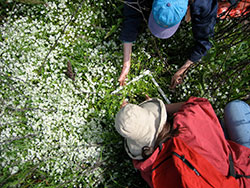
    two scientist making a grid with pvc pipe to count meadowfoam plants for a survey
    Christina conducting a population survey of the endangered Sebastopol meadowfoam
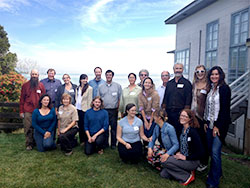
    nineteen scientist posing in front of a building with grass and trees and the ocean and blue skies in background
    Christina with participating scientists and stakeholders after a tidal marsh management workshop in San Francisco Bay
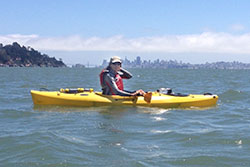
    scientist on kayak in the ocean with trees and blue sky in the background
    Christina kayaking on SF Bay to survey rare American Oystercatcher populations

    Dr. Christina Sloop has been CDFW’s Science Advisor since May 2018. She leads the CDFW Science Institute, where she manages programs on science support, and works with her staff to integrate climate change resilience and biodiversity conservation practices into CDFW’s scientific, management and conservation work.

    A native of Munich, Germany, Christina first came to the United States as a high school exchange student. She later returned for college, earning a Bachelor’s degree in Biology with a minor in Environmental Studies from Sonoma State University, a Master’s degree in Conservation Biology from San Francisco State University, and a doctorate in Ecology and Conservation Genetics from UC Davis.

    Prior to starting her current job, Christina worked for more than two years in CDFW’s Water Branch, co-authoring the 2017 CDFW Delta Conservation Framework. Prior to that, she worked in the nonprofit and consulting world, where she was active in raising awareness for climate adaptation and climate-smart practices for resource managers. She worked on sea level rise impacts and wetland restoration efforts in the San Francisco Bay, and on conservation issues related to North American migratory birds.

    What drew you to the field of biological science?

    I spent my childhood exploring the woods behind my house in the suburbs of Munich. These times in the woods and Sir David Attenborough’s television shows sparked my interest in nature. I was always interested in systems and how everything works together. I learned more about our environmental crisis, and so I vowed I would do my best to contribute to conservation of our natural ecosystems.

    During my career I have worked primarily within the context of plant and bird conservation. As ecologist and conservation geneticist I recognize that everything is interconnected. Without plants, there is no habitat for most wildlife. Without bees or birds, there is no pollination of many species. Without wildlife, there is no seed dispersal for many plants. Nothing in nature occurs in isolation.

    And humans are part of nature! For example, participating in five annual aerial waterfowl surveys opened my eyes to the critical importance of regulated hunting activities to land conservation. While humans harvest animals each season, many wetlands are protected to provide for critical habitat to ensure that both animals and sustainable hunting can thrive. Win-win! This interdependence and interconnection fascinates me and makes me want to better understand these dynamics and interactions.

    As CDFW’s Science Advisor, you oversee the Science Institute. What is that?

    The Science Institute is a CDFW initiative that began in 2012. It provides dedicated scientific staff and resources to support CDFW’s scientific efforts and help link science to decision-making. This support includes tools like information access, guidelines and policies, online discussion forums, communication pathways, professional development and other ways to support and connect our communities of scientists whose work informs our statewide natural resource management and policy decisions. It also helps link CDFW scientists with cutting-edge scientific projects and partnerships throughout the state relative to climate change and biodiversity, two overarching topics that fundamentally affect our work statewide.

    The Science Institute’s recent link opens in new window2018-2019 Progress Report (PDF) highlights some of our accomplishments to date. There are so many ways that we can help connect the dots. The work we are doing touches every corner of the department, and ultimately, helps us provide better service to the people of California.

    What have you found to be the most challenging aspect of your job?

    It is very interesting, yet a bit challenging, to pull together details of the many scientific efforts statewide. California is a big state and there is a lot of critical scientific work done, and yet to do, by CDFW staff. We are currently creating a knowledge base that supports our overarching strategic planning efforts and helps us to inform each other about how our work may link together, and how we may be able to learn from each other and find efficiencies.

    Since the beginning, our goal has been to put in place pathways for us to more easily plan ahead, taking anticipatory rather than reactionary actions in order to serve our Department mission. Therefore, for the past two years, we have been working with our scientists to develop a five-year strategic action plan for the Science Institute to guide our actions from 2020-25. We incorporate information in this plan gathered from targeted interviews, planning workshops, roadshows to all CDFW regions, a Science Institute staff retreat, and our 2020 Science Symposium.

    The Science Institute Strategic Action Plan is now in its final stages of completion and will be released this summer. With the Plan in hand, we can adjust which actions are priorities to accomplish each year, which to wait on, or which to prepare for in the background, depending on the opportunities or restrictions we are facing at the time. This is especially pertinent in this time of the COVID-19 pandemic, where many of our science efforts in the department have been affected. However, since we (almost!) have a Plan in place, we are more nimble in our response to this crisis, changing our course accordingly to still make progress in supporting science at CDFW.

    Everyone’s best efforts to plan ahead have been put to the test in light of COVID-19. How has the pandemic changed the way CDFW does scientific work, and how has the Science Institute been able to assist in the transition?

    In many cases, our scientists and engineers are continuing to perform their duties as best as possible under the mandatory social isolation guidelines. However, this brings with it challenges, especially in situations that include small vessels, where it is hard to keep an adequate distance, while having to fit more than one person for safety reasons.

    In order to keep our staff as safe as possible, other CDFW scientists have been ordered to refrain from field or laboratory work and to continue other scientific tasks like data analysis and reporting by teleworking. Many scheduled field research or monitoring efforts are canceled this year, resulting in the lack of 2020 reference data to inform resource management activities – for example, long-term population studies on elk, or other sensitive species.

    Another challenge this crisis has brought about is that our programs that are engaged in the captive breeding of sensitive species, such as white abalone, are finding it challenging to harvest food resources for their colonies due to limited beach access. And the uncertainty of how long the pandemic will last hampers the ability of our scientists to plan future field work or ocean studies, or schedule trips to retrieve information from established research plots. Inability to attend to these plots could mean the loss of substantial investment of time, money and critical information, especially when the research relates to listed species.

    The Science Institute has been working with members of the Science Institute Advisory Team, composed of representatives from all CDFW Regions and Branches, to open communication channels to share information and experiences. The Science Institute plans to engage with science programs across the state to gather more specific information on the limitations and impacts this pandemic has brought to department scientific endeavors. Obtaining and documenting this information is critical to inform planning and the department’s readiness for future emergency situations.

    What challenges do you think lie ahead for CDFW scientists?

    My sense is that the uncertainty of how long this pandemic will last will prove challenging for our scientific programs, as adequate planning, which is vital for many research efforts, is practically impossible. Continued funding for our scientific work is also uncertain in many cases. A half-baked scientific study is usually not worth much, thus if funding dries up, already-invested money and effort may be lost. This will also very likely affect our overall scientific capacity, where less science staff are asked to do more. I think our scientific programs can work on reexamining their priorities and Science Institute staff can facilitate this and work with interested programs to identify ways to focus available resources specifically on those priorities.

    What successes have you seen as CDFW adjusts to the changes brought about by COVID-19?

    I have been really impressed at how well our community of scientists have responded to their changed working conditions, and the reality that this “new normal” means to approach work with an innovative mind, focusing on what is possible rather than dwell on what is not. My impression is that the department, has thus far proven largely resilient under these unprecedented circumstances. Way to go! This brings me hope that as the economic repercussions become more real to all of us in the coming months and years, we will be as resilient as possible to continue our important work for California’ natural resources and for all Californians.

    ###

    CDFW Photos. Top Photo: Christina performing an aerial waterfowl survey for the annual national mid-winter survey.

    Categories:   Featured Scientist

    Marcia Grefsrud is an environmental scientist with CDFW’s Bay Delta Region. She spends much of her time working in the field, reviewing requests for incidental take permits and streambed alteration agreements. Her work helps to ensure that urban development does not destroy the resources upon which wildlife depend. She also serves as an advocate for many vulnerable species in the Bay Area, most notably the California tiger salamander (Ambystoma californiense), a stocky black and yellow amphibian that inhabits many of the stock ponds and grasslands in Alameda County.

    Marcia took an unconventional path to her current position. She has attended a number of colleges and universities from as far north as Bemidji, Minnesota to as far south and east as Puerto Rico and as far west as Cal State East Bay in Hayward. A former petty officer in the US Navy, she also served as a CDFW wildlife officer before becoming a scientist.

    Outside of work, Marcia is also skilled photographer with an extensive portfolio of wildlife images. She is particularly good at “macro-photography” – capturing small details of a dragonfly’s wing or a bushtit’s feathered breast. Her images are often featured on CDFW’s social media pages and in publications.

    woman talks to six children in a dry meadow of golden grasses

    Who or what inspired you to become a scientist?

    I grew up during the time of “Wild Kingdom,” “The Undersea World of Jacques Cousteau” and “Jaws,” and I became fascinated with marine biology, especially sharks. My passion at the time was to be a marine biologist, but there obviously weren’t any colleges in Minnesota offering that field of study and I didn’t have the money to move out of state. Eventually, I couldn’t afford to stay in college, so I opted for something else – the Navy. That decision sent me on an entirely different career track of advanced electronics and cryptology.

    How did you come to work for CDFW?

    I moved to California after accepting a job as a Navy Tech Rep/Project Manager at Mare Island Naval Shipyard in Vallejo. That job required extensive overseas and stateside travel and long work hours often in remote military bases such as Iceland and Adak, Alaska. The base closures left two options – I could relocate to San Diego or find another job. I opted to leave the federal government and return to school with the goal of studying raptor biology. But life had other plans, so after graduating from CDFW’s Resource Academy, I worked as a fish and game warden for three years. I made the jump to the scientific side 17 years ago.

    Your job involves working with developers and builders to issue permits in the East Bay. Why is that important?

    I cover all of Alameda County, which includes the highly urbanized area along the easternmost portion of San Francisco Bay and the more rural, eastern portion that supports ranching, with an urban/suburban center located in the Tri-Valley region. The county is approximately 50 percent agricultural land and 50 percent urban lands. Then there is the Altamont area of Alameda County, which is known for the wind turbines populating the hillsides. Combined, each of these areas make Alameda County one of the busiest counties in the region for Habitat Conservation. For example, from 2010-2015, approximately 668 acres of habitat in Alameda County was permanently lost as a result of residential development alone. But approximately 2,066 acres of habitat has been permanently conserved as a result of incidental take permits issued for those residential developments.

    What is a typical day like for you at work?

    When I’m in the office, I spend the day answering emails and telephone calls. I split my time between writing permits and agreements, reviewing conservation lands packages and monitoring reports. On the fortunate days when I’m in the field, I could be doing compliance checks, visiting project sites or attending meetings. If I’m really fortunate, I could be doing stream or pond surveys.

    What is your favorite species to interact with or study?

    Hands down, the California tiger salamander. They are my favorite probably because there is so much more to learn about them and I love the challenge. There have been many studies but there are still gaps in our knowledge that may never be filled. Plus, they are so darn cute!

    What is the most rewarding project that you’ve worked on for CDFW?

    The California Endangered Species Act (CESA) was intended to help protect wildlife and their habitats, but it can also create unintended hurdles. For instance, in Alameda County, privately owned stock ponds – which are prime breeding grounds for the California tiger salamander – have a finite lifespan, and may require maintenance and upkeep in order to function properly. When California tiger salamanders became a candidate species for state listing in 2009, new permitting and mitigation requirements went into effect. Because any land improvements or changes within CTS habitat were now subject to strict oversight, I became concerned that some ranchers would let their stock ponds go unmaintained rather than attempt to go through the permitting process.

    After doing a lot of digging, I found a little-used section of the Fish and Game Code regarding Voluntary Local Programs (VLPs). These are similar to the state and federal Safe Harbor Agreement program, except the VLP is specifically for routine and ongoing agricultural activities on farms and ranches that encourage habitat for state listed or candidate species. A VLP must include management practices that will avoid and minimize harm while encouraging the enhancement of habitat. Landowners or ranchers that sign up with the local VLP agree to voluntarily carry out specific habitat improvements and to abide by avoidance and minimization measures. These measures are developed and agreed upon by CDFW, the program administrator (in this case, the Alameda County Resource Conservation District), the California Department of Food and Agriculture and other agricultural experts.

    Ranchers can then perform routine and ongoing agricultural activities and necessary maintenance to stock ponds, roads, streams and other agreed-upon practices without risk of violating CESA. Even though we had to “give a little,” the Alameda County VLP has helped CDFW build trusting relationships with the Resource Conservation District and the local ranching community, and has ultimately allowed more potential breeding ponds to be repaired in a timely manner.

    What is the most challenging aspect of your career as an environmental scientist?

    The enormous amount of work and the limitations of our job duties.

    If you had free reign and unlimited funding, what scientific project would you most like to do?

    At the moment I want to do a study on teeth patterns of California tiger salamanders compared to hybrids and non-natives. One study I looked at found that considerable variation in tooth morphology may be found between species of the same genus. There is a possibility that the teeth patterns between the native salamanders, non-natives and hybrids are different. If so, it may provide another indicator to determine whether or not a specific animal is pure CTS or hybrid.

    What is it about the work you do that you’d most like us to know?

    Some people think Habitat Conservation work is boring and/or not important because it doesn’t sound as exciting as chasing poachers or studying wildlife. Sometimes the work is tedious, but what we do is extremely important because without it we would face more species’ extinction and destruction of terrestrial and aquatic habitat.

    How does your interest in photography intersect with your work as a scientist?

    I have had a lifelong interest in photography and art, but only recently started to explore photography as art. In addition to photographing wildlife (which has its challenges), I am drawn to the old, obscure, dilapidated and overlooked parts of our environment -- from the tiny mushroom to the broken-down piano dumped on the side of the road. One of the joys I find with photography is being able to show beauty in things that often go unnoticed.

    One of the cool things about photography for me is it allows me to visually study some of these animals without physically capturing them. It is amazing what you learn when you are looking at a macro, like the wing structure of a dragonfly or embryos of foothill yellow-legged frogs. I’ve also been able to capture some remarkable photos of birds in action. I have a series of photos of an osprey repeatedly dive bombing a bald eagle. Then another series with a red-tailed hawk attacking a bald eagle that was trying to steal a fish from an osprey. One photo that will hopefully be published in a short note soon is of a peregrine falcon that predated a federally and state protected Ridgway’s rail. The photos are not National Geographic worthy, but they do tell stories!

    Do you have any advice for people considering careers in science or natural resources?

    With so much information available on the Internet now, I would start by exploring government and non-profit websites to find volunteer opportunities. The more field experience they can get the better off they will be both in finding a job and really beginning to find their passion. Finally, I would recommend when they do find something they are passionate about then stay focused and go for it!

    Categories:   Featured Scientist

    Colleen Young is an Environmental Scientist for CDFW’s Office of Spill Prevention and Response (OSPR) Marine Wildlife Veterinary Care and Research Center in Santa Cruz. Her primary job duties include oil spill contingency planning for sea otters and other marine wildlife, maintaining response equipment and working as part of the Wildlife Recovery team during spills.

    During non-spill times, Colleen’s responsibilities shift to sea otter research and conservation projects. This work includes ground and aerial sea otter census surveys, sea otter stranding response, performing postmortem examinations on sea otters and occasionally other species, tagging and monitoring wild sea otters and working on sea otter disturbance issues. She is on the CDFW SCUBA diving team and is one of two CDFW divers trained to use re-breathers to capture sea otters. These projects are done in close collaboration with the U.S. Geological Survey, the U.S. Fish and Wildlife Service, the Monterey Bay Aquarium, UC Santa Cruz, Sea Otter Savvy and other partner organizations.

    Colleen earned a B.S. in Animal Biology from UC Davis in 2006 and an M.S. in Marine Science with an emphasis in Vertebrate Ecology from Moss Landing Marine Laboratories/San Jose State University in 2009. She began working as a scientific aide for CDFW in 2010 and was hired for her current position in 2011. Colleen is grateful to have a job that involves working with such an ecologically important, threatened species, and that allows her to work outside and live along California’s beautiful Central Coast.

    Who or what inspired you to become a scientist?

    I had some really amazing science teachers in high school that showed me that science was really fun and interesting. When I started volunteering to help with research projects when I was an undergraduate in college, I knew that doing scientific research was something that I wanted to pursue further. When I got certified to SCUBA dive and started doing research in and around the ocean, I knew I wanted to do that for a career.

    What got you interested in working with wildlife?

    Growing up we had lots of pets, so I’ve always had a deep connection with and respect for animals. I considered pursuing a career involving companion animals, but I really enjoy working outside, in nature, and wild animals absolutely fascinate and amaze me. I was hooked on wildlife after doing an internship studying wild bottlenose dolphins.

    Who or what brought you to CDFW? What inspires you to stay?

    Just after finishing graduate school I was hired to work at the CDFW office in Santa Cruz to work on some grant-funded seabird projects. I really enjoyed the work that I was doing and saw great value in the sea otter work that my CDFW colleagues were doing, so when a permanent job became available, applying was a no-brainer. I don’t plan on going anywhere anytime soon, since I love my job and I get to live in this beautiful place.

    scientist looking through scope

    What is a typical day like for you at work?

    There is no such thing as a typical day for me, which is just the way I like it. It is very unusual for me to spend a whole day working at my desk. You can usually find me working in our necropsy lab, on the beach responding to a stranded sea otter call, working on oil spill preparedness (testing equipment, working on protocols, etc.) or doing a proficiency dive with my dive buddy so we’re ready for our next round of sea otter captures. At the end of the day, I always try to read and respond to emails, but I often get interrupted by a stranding call, so I can’t always answer emails as quickly as I’d like.

    What is the most rewarding project that you’ve worked on for CDFW?

    I think probably the Santa Barbara oil spill near Refugio State Beach in 2015. This was my first major spill since starting at the Department and I worked as part of the Wildlife Recovery team. It was really rewarding to collect all those oiled animals, which likely would’ve died without our help.

    Over the course of your career, was there a discovery or an incident that surprised you?

    I am surprised all the time! A big part of my job is performing necropsies (animal autopsies) on sea otters, and sometimes other species as well. Often it looks like the cause of death will be obvious, but when we get inside we see all sorts of weird, unexpected things. That’s one of the things that keeps my job fun and interesting … we never know what we’re going to find!

    If you had free reign and unlimited funding, what scientific project would you most like to do?

    I would love to work more on one of my ongoing projects, which is looking into the mechanism by which some sea otters acquire purple staining on their teeth and bones. This phenomenon, known as echinochrome staining, has been documented for decades, and is extremely common in sea otters. It almost certainly occurs when sea otters consume copious amounts of echinochrome-containing prey items like sea urchins and other echinoderms, but the mechanism and physiology of the process has not been described. I would love to have time (and funding) to really understand how and when staining occurs, and whether there are any individual health implications, or broader ecological implications, of this process. Until I have unlimited time and funding though, I’ll just keep working on this project a little at a time.

    What is the best thing about being a wildlife scientist?

    I get to spend so much time outside being active. I spend a lot of time on the beach, on the ocean and in the ocean (diving), and most of it is pretty physical, so I get to exercise and spend time in nature as part of my job. Oh, and working with animals is pretty cool too. Doesn’t get any better than that!

    The world of science and managing natural resources is often confusing or mysterious for the average person. What is it about the work you do that you’d most like us to know that will take away the mystery?

    Effective management of natural resources should be based on good scientific data. It takes time to develop protocols, to collect and analyze data, and to summarize and disseminate findings. So sometimes when it looks like no action is being taken on an issue there are probably people working hard behind the scenes on it. Furthermore, it can be difficult for one program or even one agency to collect all the adequate scientific data that is needed to make good management decisions. Therefore, collaboration is key. Agencies and organizations often work together to collect data and implement management decisions. In the case of sea otters, the U.S. Fish and Wildlife Service has management authority, but CDFW and other agencies and organizations work collaboratively with USFWS to collect and share data that help inform management decisions. Having multiple partners can sometimes slow things down, but in the end usually yields better results.

    Is there a preconception about scientists you would like to dispel?

    I can speak most to marine biologists. When most people think of marine biologists, they picture someone training and hugging dolphins, or getting up close and personal with cute, charismatic animals all the time. In reality though, marine biology is not very glamorous or easy work. It often requires working long hours, sometimes very early or late, depending on the tides. You are often wet, cold, dirty and stinky. Many biologists never even lay hands on the animals they are studying … they collect and/or study scat (poop), tracks and photographs, and make observations from afar. Some biologists, like me, mainly study their species by examining dead animals, which can be stinky and gross, but also extremely interesting and informative.

    Any advice for people considering careers in science or natural resources?

    Get as much hands-on field experience as possible. Not only does that allow you to figure out what types of work you do and do not like, but having field experience is a huge advantage when applying for jobs. Also, attend conferences and events that will allow you to network with people who have careers you are interested in. Ask them questions about what they do and don’t like about their jobs, and what kind of experience and education you need to get that type of job.

    Categories:   Featured Scientist