(Verbena californica)
Background
| Family |
Verbenaceae (Vervains) |
| Life History |
Perennial |
| Range |
Tuolumne County |
| CDFW Region |
Central Region (Region 4) |
| CA Listing |
Threatened |
| US Listing |
Threatened |
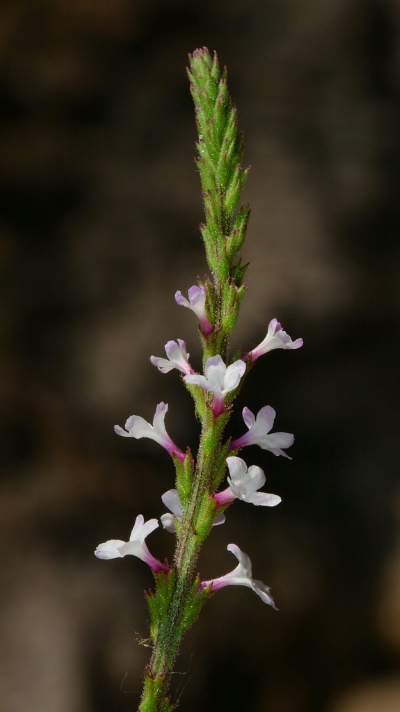 Verbena californica by David Greenberger. (CC BY-NC)
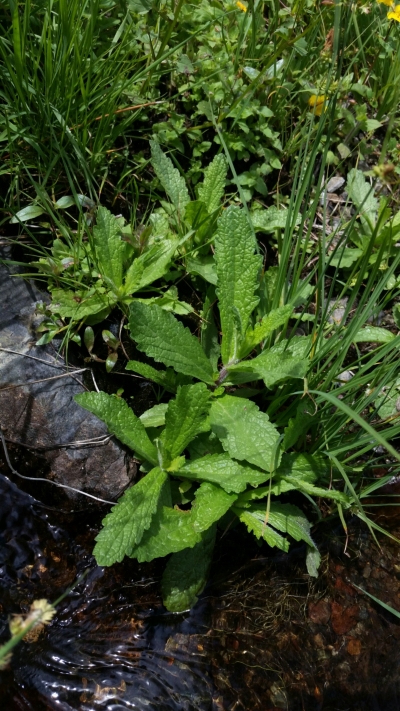 Verbena californica by David Greenberger. (CC BY-NC)
Red Hills vervain (Verbena californica) is a California threatened plant species, and killing or possessing the plant is prohibited by the California Endangered Species Act (CESA). This species is also listed as threatened under the federal Endangered Species Act (ESA) . A member of the vervain family (Verbenaceae), Red Hills vervain is a tall, perennial herb growing up to 74 cm (2.5 ft). This plant has spikes of one to five small, light purple flowers and blooms from May through September. Flowers start appearing at the bottom of each spike and move upwards as the season progresses. Red Hills vervain can be distinguished from other vervains by its unusual habitat requirements and distinct flower and fruit stages that do not occur simultaneously.
Distribution
Red Hills vervain is only found in the Red Hills of Tuolumne County, an area made up of serpentine soils supporting a unique plant community. Within this one location, Red Hills vervain is further restricted to streams with year-round moisture. Another rare plant endemic to the Red Hills, Cleveland's butterweed (Senecio clevelandii var. heterophyllus), co-occurs with Red Hills vervain.
The California Natural Diversity Database lists 11 likely extant populations of Red Hills vervain; all are located within a band approximately one-half mile wide and five miles long. Over half of the populations are located on Bureau of Land Management (BLM) land within the Red Hills Management Area, which has been designated an Area of Critical Environmental Concern (ACEC) to protect the area's rare plants. The two largest populations of Red Hills vervain (several thousand individuals each) are partially on private property. Three additional populations ranging in size from under 100 plants to over 200 are either entirely on private land or overlapping on both BLM and private property.
Conservation
Historical placer gold mining activities may have reduced the size of several Red Hills vervain populations by disturbing the streams the plant relies on. Recreational gold mining still threatens some populations, but now the primary threat to the species is residential development on or adjacent to populations. A major concern is that residential development could lower the water table upstream from the Red Hills vervain habitat, drying up the moist areas and cutting off the year-round moisture the species depends on. Some populations are also impacted by invasive species including yellow starthistle (Centaurea solstitialis) and Bermuda grass (Cynodon dactylo). Another risk at some occurrences is off-trail trampling by visitors.
In September 2025, the “6-5” fire burned through the Red Hills ACEC, overlapping with half of the Red Hills vervain populations. The impacts of this fire (and fire in general) on this species are unknown, so more research and monitoring are needed to assess the status of the species.
CDFW may issue permits for Red Hills vervain pursuant to CESA, and we invite you to learn more about the California laws protecting Red Hills vervain and other California native plants. Populations of Red Hills vervain occur in CDFW's Central Region.
References
- Bureau of Land Management (BLM). Hills Recreation Management Area. U.S. Department of the Interior.
- CAL FIRE. 2025. 6-5 Fire. CAL FIRE Tuolumne-Calaveras Unit.
- California Native Plant Society (CNPS), Rare Plant Program. 2025. Senecio clevelandii var. heterophyllus. Rare Plant Inventory (online edition, v9.5.1).
- U.S. Fish and Wildlife Service. 2007. Red Hills Vervain (Verbena californica) 5-year review: Summary and Review. Sacramento Fish and Wildlife Office.
- Wilken, D. 2012. Verbena californica, in Flora Project (eds.) Jepson eFlora. Accessed on March 16, 2026.
Updated 04/16/2026