Conservation Partners
CDFW is actively engaged in efforts to conserve and improve sturgeon populations in California. These projects often involve collaboration with federal, state, academic, and non-government partners.
CDFW has directed scientists to identify, and address population decline from non-fishing sources. This includes developing conditions to avoid, minimize, or mitigate impacts to Green and/or White sturgeon that could be required on projects that affect sturgeon. CDFW will use these conditions along with project-specific analyses when permitting various activities such as transportation, development, and water infrastructure.
Since White Sturgeon became a candidate species under CESA, CDFW has worked with the California Department of Water Resources (DWR) to amend the existing Incidental Take Permit for the State Water Project (SWP). The amendment increases requirements for avoidance, minimization, and other mitigation measures. DWR also will invest in a Science Plan for the species, invest in new monitoring around the SWP impacts, increase entrainment and salvage monitoring to deal with risks to White Sturgeon, and develop a risk assessment process that can respond to entrainment of juvenile sturgeon and alter operations to reduce take.
In addition to the projects described below, other efforts include monitoring habitat quality and studying sources of adult mortality, such as vessel strikes or predation.
Monitoring Sturgeon Populations
Population monitoring is critical to provide an accurate estimate of population size, habitat use, and spawning efforts. Learn more about some of the current population evaluation methods below:
Setline Survey
The Department is currently engaged in a robust mark-recapture survey in San Francisco Bay and the Delta to provide an accurate estimate of the current white sturgeon population. This survey is independent of sturgeon report card data and is adapted from established methods used in Oregon and Washington. CDFW initiated this new pilot White Sturgeon monitoring program in May 2024. The program uses a mark-recapture design, which is a common tool in fishery management. In this method, fish are captured, given a permanent mark, released to mix back into the population, and then recaptured several months later. The proportion of new vs. previously marked fish caught during the recapture phase can be used in models to estimate the total number of fish in the population. In this new program, White Sturgeon are captured throughout the Bay-Delta region using anchored setlines. Each fish is measured and marked with a PIT tag (the same kind of tag used to microchip pets) that will last for the entire long life of the fish. Capture, marking, and scanning of fish is conducted by a collaboration between boat captains from the sturgeon fishing guide community and CDFW and Pacific States Marine Fisheries Commission scientists.
The study design has been peer-reviewed and is intended to be the most robust and comprehensive white sturgeon population monitoring survey ever conducted in California. Results from the first pilot year of the study, along with a technical report on the survey design, are available for download.
Guide Tagging Program
In addition to the Setline Survey, CDFW has also partnered with guides and boat captains from the sturgeon fishing community to collect data from fish they capture with clients. Participants are trained and supplied with data collection tools. They are asked to measure, scan, and photograph all sturgeon caught by clients. This program permits guides to use their fish catching knowledge and expertise to help the Department collect data that will inform future management and conservation efforts.
Report Cards
Data from report cards provide information on the number of White and Green sturgeon caught, catch per angler, and summaries of temporal (month or season) and spatial (catch location) fishing pressure (i.e., number of anglers). After Report Cards are returned, CDFW compiles all Card data from the previous season and produces a technical report. The resulting report summarizes data from the previous Card season in comparison with past Card seasons. Visit our Sturgeon Report Card page for access to the most recent report (PDF), as well as past reports.
Tracking Sturgeon Movement
Telemetry
Adult White Sturgeon and juvenile southern DPS Green Sturgeon are captured by CDFW staff and fitted with acoustic tags. These tags serve to track individuals for long periods of time across a wide range of habitats from the bay delta and up rivers. This helps inform the rearing and migration patterns for both species and improve management. Mature White Sturgeon are especially monitored for spawning migration during various water outflow conditions/water year types. Learn more about acoustic tagging in the Green Sturgeon Telemetry Report (PDF).
Sonar Survey
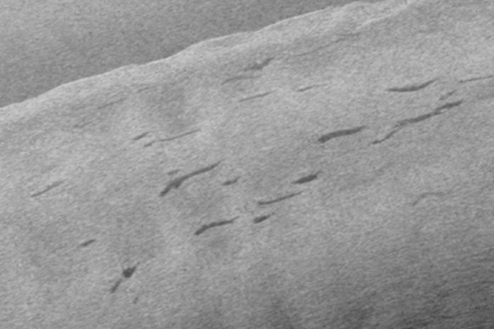 Sturgeon imaged on sidescan sonar.
CDFW and Pacific States Marine Fisheries Comission look for spawning sturgeon on rivers during spawning season. This supports the telemetry efforts and helps define important spawning locations, and may provide rough indexes of annual spawning activity. Learn more about how CDFW uses sonar
Rescue Efforts
Sturgeon may be stranded on floodplains and bypasses after high flow events. Once flood waters recede, sturgeon may become trapped in deep holes where they are cut off from access to the river. CDFW staff are aware of frequent stranding locations and regularly conduct seasonal rescue efforts to prevent the mortality these fish would otherwise face.
What can you do?
You can assist the Delta ecosystem and sturgeon recovery in several ways:
Sturgeon Carcass Reporting
Researchers studying the causes of death of adult sturgeon (PDF) request that any observations of sturgeon carcasses be reported to CASturgeonResearch@gmail.com.
Provide as much information as possible including:
- Detailed location (such as GPS coordinates, landmarks, cellphone map app screenshots).
- Pictures (please include common items for scale such as coins or dollar bills, beverage can, etc.).
- Do not move or damage the carcass. Specialists will locate the carcass and take measurements and samples as part of this ongoing monitoring study.