Science Spotlight

Subscribe

Receive Science Institute news by email.

    All Science Spotlight Articles

    rss

    CDFW Biologists and Scientific Aids conducting electrofishing operations to briefly stun fish so they can be identified, measured, tagged or sampled before being released unharmed.
    CDFW Biologists and Scientific Aids conducting electrofishing operations to briefly stun fish so they can be identified, measured, tagged or sampled before being released unharmed.

    Steelhead are among California's most remarkable fish. Born in freshwater streams, these ocean-going rainbow trout can migrate hundreds of miles to the Pacific Ocean before returning to the very streams where they hatched to spawn. Understanding where steelhead live, how they use habitat, and how many adults return each year is critical to conserving these iconic fish.

    “The best way to understand and support this unique species is to monitor steelhead throughout the year using a variety of scientific techniques tailored to each season,” according to Deena Hansen, the California Department of Fish and Wildlife (CDFW) senior environmental scientist supervisor who oversees steelhead monitoring across the South Coast Region for the Department in southern California.

    CDFW Biologists and Scientific Aids conducting electrofishing operations to briefly stun fish so they can be identified, measured, tagged or sampled before being released unharmed.
    CDFW Biologists and Scientific Aids conducting electrofishing operations to briefly stun fish so they can be identified, measured, tagged or sampled before being released unharmed.

    Summer through Mid-Fall: Surveying Young Fish

    As weather conditions dry out and stream flows recede during the summer and fall, biologists conduct electrofishing and snorkel surveys to assess juvenile steelhead and resident rainbow trout populations. Occasionally, adult steelhead may spend their summers in freshwater, though it is less common.

    Electrofishing uses a battery-powered backpack to send a controlled electric shock into the water. The electric current temporarily stuns fish, allowing scientists to net them and transfer them to buckets. Biologists then identify species, measure individuals, evaluate their health, and document where they occur before quickly returning them to the water. In areas where water clarity and habitat conditions allow, snorkel surveys provide another effective way to observe fish in their natural environment with minimal disturbance.

    These surveys help scientists understand where steelhead are thriving, how they use available habitat, and how environmental conditions influence survival.

    Late Fall through Early Summer: Tracking the Return Home

    When rain arrives and river levels begin to rise in the fall and winter months, adult steelhead begin their migration back to freshwater to spawn.

    During this critical period, CDFW biologists conduct redd surveys, searching streams for the gravel nests, known as redds, that female steelhead construct to lay their eggs. Steelhead and rainbow trout are the same species, but while steelhead migrate from freshwater to the ocean, rainbow trout spend their entire lives in freshwater. Counting redds helps estimate spawning activity and identify important spawning habitat. Steelhead redds stand out from resident rainbow trout redds because they are typically larger, reflecting the larger size of the adult steelhead.

    In some watersheds, sonar cameras complement traditional field surveys by allowing scientists to monitor fish migrations without handling the fish. “Sonar cameras are like a fish finder, except they look across a river from bank to bank instead of down to the bottom," according to Hansen. The equipment is especially valuable in high-flowing or turbid, sediment-rich watersheds where other sampling methods may not be effective, and because it operates around the clock, it allows biologists to continuously monitor fish movement. These systems provide valuable information on the timing and number of returning adults while minimizing disturbance during spawning season.

    Steelhead being measured by CDFW biologists before being released.
    Steelhead being measured by CDFW biologists before being released.

    Young steelhead develop into smolts and after spending 1 to 3 years in freshwater, they begin their migration to the ocean. This typically occurs from late winter through early summer when higher flows trigger outmigration. CDFW biologists use a variety of monitoring techniques to better understand their survival and movement. In addition to tracking juvenile steelhead as they migrate to the ocean, CDFW biologists use a variety of monitoring techniques to monitor or capture fish in different watersheds, including:

    • Acoustic telemetry: Small transmitters are attached to fish, allowing scientists to track their movements and survival as they travel through rivers and estuaries.
    • Passive Integrated Transponder (PIT) tag arrays: Tiny electronic tags implanted in fish are detected by stationary antennas, helping biologists monitor migration timing and movement without recapturing the fish.
    • Rotary screw traps: Cone-shaped traps placed in rivers safely capture downstream-moving juvenile fish so biologists can estimate abundance, migration timing and overall population trends before releasing them.
    • Seine nets: Large nets are pulled through shallow water to temporarily capture fish, allowing scientists to assess species’ composition, abundance and size before releasing them.
    • Fyke nets: Funnel-shaped nets that passively capture fish moving with the current, providing information on migration patterns and fish abundance.
    • Electrofishing: A carefully controlled electrical current is used to briefly stun fish so they can be identified, measured, tagged or sampled before being released unharmed.

    Together, these tools help scientists track steelhead as they make the critical transition from freshwater to the ocean and back, providing valuable information to guide conservation and fisheries management.

    Science Across Every Season

    No single survey tells the whole story. By monitoring steelhead life stages throughout the year, CDFW scientists build a more complete picture of population health, habitat use, and reproductive success.

    “The information collected helps guide our habitat restoration efforts, informs our fisheries management decisions, and supports conservation efforts aimed at maintaining healthy, resilient steelhead populations across California,” said Audrey Dean, one of CDFW Fisheries Branch’s senior environmental scientists that coordinates the statewide California Monitoring Program.

    Every season offers another opportunity to learn about these remarkable fish. Together, year-round monitoring helps ensure that future generations can continue to witness one of California's most extraordinary wildlife migrations.

    ###

    Media Contact:
    Cort Klopping, CDFW Communications, (916) 201-2958

    Categories:   Science Spotlight, steelhead, Wildlife Research

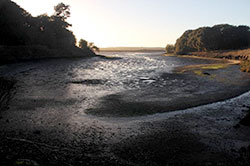
    elkhorn slough water reserve with trees along the banks and sun in horizon
    CDFW manages about 940,000 acres in over 200 properties statewide that are designated as wildlife areas or ecological reserves. Pictured is Elkhorn Slough Ecological Reserve in Monterey County.
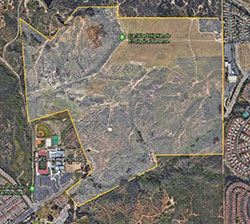
    arial map of carlsbad ecological reserve of mountains, grass houses roads
    Properties like the Carlsbad Highlands Ecological Reserve are acquired and managed to protect sensitive plant and wildlife species.
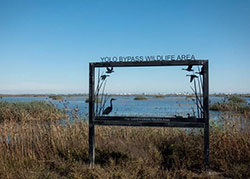
    yolo bypass sign with tall grasses water blue sky in horizon
    At the nearly 17,000-acre Yolo Bypass Wildlife Area near Davis, staff close off some areas to the public during certain times of year. The closed zones offer resident wildlife a reprieve from the many activities offered at the site such as hunting, wildlife viewing, and student education field trips.

    CDFW working to improve negative effects of non-consumptive recreation on conservation

    Editor’s Note: As we publish this article, California, the nation, and the whole world are gripped by the COVID-19 pandemic. To slow its spread and not overwhelm healthcare resources, distancing and stay-at-home orders have led to the delay of trout openers and other fishing events, and closure of parks, reserves and many other publicly accessible facilities. Stories are beginning to emerge of increased wildlife presence in park and reserve areas that are normally filled with people. We look forward to the end of the pandemic and its horrible devastation will be over very soon but we know it will be some time before we realize a return to “normal.” We hope to gain from this emergency more information on wildlife’s response to fewer visitors – data that may be able to help us improve our management of parks and reserves in a way that protects wildlife and their habitat while also providing reasonable recreation experiences. In the meantime, stay well, and stay home to save lives.

    Do Not Feed Wildlife. Do Not Cut Switchbacks. Stay On Trail. 

    If you’ve spent time in recreational areas, you’ve seen the signs. You’ve most likely complied with them. But you may not have a full understanding of why the rules are important.

    A growing body of research is showing that non-consumptive recreation – i.e., activities like hiking, biking and bird watching, that don’t involve harvesting of resources – can have harmful effects on species, their habitat and efforts to protect them.

    For example, link opens in new tab or windowone study showed that mule deer may experience increased predation risk when they shifted toward nocturnal activity in response to human recreation. Another study showed that human activity resulted in elk foraging less and showing increased signs of stress. link opens in new tab or windowResearch has shown (PDF) that higher levels of human activity reduced habitat suitability for bobcats, gray fox, mule deer and raccoons. Human activity has also been linked to declines in reptile species.

    Recreation link opens in new tab or windowhas been cited as a factor in endangerment of plant and animal species on federal lands, and of all U.S. states, California has thelink opens in new tab or windowgreatest number of listed species that are threatened by recreation. In a link opens in new tab or windowliterature review led by Courtney Larson, a scientist for The Nature Conservancy, 93 percent of included articles found significant effects of recreation on wildlife.

    “CDFW is tasked with managing the state’s diverse plant and wildlife species and the public’s use and enjoyment of them – so how do we also manage the effects of recreation? We have to bring environmental stewardship into the fold and find ways for recreation and conservation groups to work together,” said Ron Unger, a program manager in CDFW’s Habitat Conservation Planning Branch. “It’s important to set aside lands for both needs. Lands set aside for conserving declining and vulnerable species generally need to be restricted in terms of public access. Other, less sensitive sites need to be set aside so people can have a positive place to enjoy and appreciate nature and the outdoors.”

    At the Carlsbad Highlands Ecological Reserve – a CDFW-owned reserve in San Diego County – land managers have had a tough time with mountain bikers and others building illegal trails. Over the past half-dozen years, bikers have illegally carved out about 17 miles of trails (the property has 2.1 miles of legal trails) and removed nearly 500 trail signs. CDFW had to link opens in new tab or windowstep up enforcement to stop the illegal trail use.

    “We don’t enjoy telling people they can’t ride here, but at the same time we have to make sure we don’t love these spaces to death – especially when the main reason the lands are acquired and set aside is to protect wildlife,” said CDFW Regional Manager Ed Pert.

    At the nearly 17,000-acre Yolo Bypass Wildlife Area near Davis, staff close off some areas to the public during certain times of year. The closed zones offer resident wildlife a reprieve from human activity.

    “It’s definitely a balance. We want the public to enjoy wildlife, but we also want to give wildlife a place to rest,” said Joe Hobbs, who manages the wildlife area.

    CDFW Senior Environmental Scientist Shannon Lucas helps coordinate the department’s Natural Community Conservation Planning (NCCP) program, which issues regional permits that allow for development while ensuring habitat protection. She also oversaw grant funding for research on the effects of recreation on NCCP lands.

    “These are areas that are intended to be preserved for their ecological value. We have a responsibility to analyze the effects of recreation on the species and habitats that contribute to conservation under an NCCP,” said Lucas.

    CDFW is involved with research efforts aimed at gaining insight into how to best balance recreation with conservation. The department’s Human Dimensions of Wildlife Unit is currently researching the views of stakeholders, and future research will assess how to best communicate with stakeholders on the issue.

    “We want to serve our constituents as well as manage the state’s natural resources for their ecological value. Once we understand how our stakeholders feel about the issue, we can communicate in a way that connects with their concerns,” said lead researcher Alex Heeren.

    CDFW just released a special edition scientific journal featuring literature reviews and original research on the effects of non-consumptive recreation on wildlife. Ange Baker, editor-in-chief of California Fish and Wildlife Journal, chose the topic after soliciting ideas from CDFW employees.

    “Research has shown that even mild recreation like hiking can have pretty significant impacts on some species. This is an especially important issue in California where CDFW manages about 940,000 acres of property designated as wildlife areas or ecological reserves. We decided to do a special edition to bring light to the issue,” said Baker.

    link opens in new tab or windowRead the special edition journal (PDF).

    CDFW Photo. Top Photo: Signage at Carlsbad Highlands Ecological Reserve in San Diego County is intended to help protect threatened and endangered plant and wildlife species by prohibiting incompatible recreation activities such as motorized vehicle, biking, and drones.

    Media Contact:
    Ken Paglia, CDFW Communications, (916) 322-8958

    Categories:   Science Spotlight

    California Fish and Game, Volume 104, Issue 2, is now available online! California Fish and Game is CDFW's official, quarterly, scientific journal devoted to the conservation and understanding of the flora and fauna of California and surrounding areas, and the eastern Pacific Ocean.

    A mallard in flight appears on the cover of the newest installment of the journal. With its iridescent green head and school bus yellow legs, the male mallard is one of the most recognizable species of duck in California. It is also the most abundant breeding species of waterfowl in the state. However, California’s mallard population estimates have generally declined since the mid-1990s. In California mallards: a review, Feldheim et. al synthesizes volumes of research in an effort to identify long-term research needs and monitoring activities to help improve management of this iconic species.

    In another paper, entitled Abundance, habitat and occupancy of Roosevelt Elk in the Bald Hills of Redwood National Park, Tolliver and Weckerly seek to understand the relationship between a species’ occupancy-abundance rate and its habitat use. Using elk sign surveys (i.e, counting tracks and feces at standardized locations) researchers found that, as population density increases, Roosevelt elk will move into other (lower quality) habitats. This was true for two herds of vastly different sizes, although the occupancy rate remained comparable.

    Finally, Hiney et. al looks at recruiting experienced anglers and using citizen science to help document and survey the native Coastal Rainbow Trout population of Grass Valley Creek Reservoir. The authors look at methods of overcoming the time and resource limitations of assessing wild trout populations.

    Also included in this issue are reviews of two books that make meaningful contributions to the field of wildlife research.

    As it has for the past 104 years, California Fish and Game continues to publish high-quality, peer-reviewed science that contributes to the understanding and conservation of California’s wildlife. We look forward to witnessing the contributions of the next installment.

    Categories:   California Fish and Game Journal

    A young woman with a rectangular wire cage containing two trapped, brown doves
    Two doves in a backyard wire trap

    A woman's right hand holds a dove's right wing outstretched
    A bander holds out a dove’s wing to see which feather has most recently molted, which will provide information about the age of the bird.

    A brown and gray dove with a silver band on its leg is held outdoors in a woman's hand
    A volunteer trapper prepares to release a banded female.

    If you have an interest in migratory upland birds – as a hunter, a birdwatcher or just a citizen scientist – there’s a unique volunteer opportunity coming up that will allow you to work hands-on with wildlife, while helping the California Department of Fish and Wildlife collect critical research data that will become part of a national database.

    Approved volunteers will be specifically trained over the next few months and permitted to capture mourning doves for a seven-week period, from July 1 through August 20, 2018. Banders attach a metal leg band to each bird, determine the bird’s age and sex , and record the data before releasing the bird. Banders can choose their own trapping sites, which in many cases are on their own property.

    CDFW is particularly in need of volunteers in North Coast and Bishop areas, but as this is a statewide program, volunteers from other areas may be able to participate as well.

    “It’s a unique opportunity for wildlife enthusiasts to get hands-on experience and play an important role in the management of California’s number one game bird,” explains Karen Fothergill, an environmental scientist and coordinator of CDFW’s Mourning Dove Banding Program.

    Several levels of participation are possible, but successful completion of a four-hour training session is mandatory for all participants. Trained volunteers will band in their local areas, ending 10 days prior to the start of the hunting season for mourning doves.

    The imprinted bands that are attached to birds’ legs are an important tool used by wildlife managers to help them evaluate mourning dove populations. Band recovery data is incorporated into the US Geological Survey Bird Banding Laboratory database and used by wildlife managers to monitor the status of mourning dove populations.

    Together, the volunteer force will band approximately 4,000 mourning doves around the state. This number – which is necessary for accurate population modeling – has only been achieved with the use of volunteers.

    Volunteer training opportunities will be held around the state, depending on how many potential volunteers show interest in participating, and where those individuals are located. Fothergill said that she expects to hold at least four training opportunities in the month of May. For scheduling purposes, potential volunteers are asked to contact Fothergill no later than April 13.

    Volunteers are not compensated, but all supplies will be loaned at no charge.

    Program participants must be over 18 and have good organizational skills and a commitment to wildlife preservation. The trapping and banding work is typically done in the morning and evening, but volunteers who can only work limited hours or on certain days can still be utilized and are welcome. For more detailed information about the program or to reserve a space at a training session, please contact Karen Fothergill at (916) 716-1461 or Karen.Fothergill@wildlife.ca.gov.

    CDFW photos.
    Top Photo: Mourning dove (Zenaida macroura)

    Categories:   General

    map of Battle Creek watershed area

    Habitat is the key to the long-term survival of Sacramento River winter-run Chinook in California. Since 1999, CDFW has been working with multiple agencies and private parties on planning efforts to restore the population of these endangered salmon. More than $100 million has been allocated to specific habitat restoration work on Battle Creek, which comprises approximately 48 miles of prime salmon and steelhead habitat.

    Over the next two months, link opens in new windowapproximately 200,000 juvenile winter-run Chinook will be released into the North Fork of Battle Creek. The introduction of these fish, which were spawned from adults last summer, is occurring sooner than expected due the availability of fish from the Livingston Stone National Fish Hatchery Winter-run Chinook Captive Broodstock Program. The fish were raised at Coleman National Fish Hatchery and are being released by Coleman Hatchery personnel. These additional fish could help bolster the winter-run Chinook population and be a potential catalyst in their recovery.

    CDFW Senior Environmental Scientist Doug Killam has worked on the Battle Creek Reintroduction Plan for nearly a decade and has been instrumental in moving in-stream projects forward. Killam sees the release of 200,000 smolts as an important step in the overall effort. The release will reestablish winter-run Chinook in a new drainage and create a separate new population. Currently there is only one viable population existing in the Sacramento River directly below Keswick and Shasta Dams. The recent drought affected the volume of the critical cold-water pool in Shasta Lake and the release of warmer water in the drought years of 2014 and 2015 resulted in major losses to eggs and young salmon below the dam. Biologists have long recognized that having more than one winter-run Chinook population is imperative for the long-term survival of the species.

    A volcanic region with rugged canyons and dramatic scenery, the North Fork of Battle Creek is unique since it has both cold snowmelt water and large amounts of spring water flowing into it at critical times for winter-run salmon to hold over in and spawn in. It is also one of a handful of waters that can support all four of the Chinook salmon runs that return to the Sacramento River Basin. Hydroelectric development of the creek in the early 1900s largely eliminated winter-run Chinook and other salmonid runs from swimming far upstream to access the cooler water required for these unique summer spawning salmon. Recent efforts to bring the fish back to the North Fork include dam removals, rock fall removal, new fish ladders and fish screens and – most importantly – an agreement to increase stream flows to provide fish with the water quantity and quality they need to survive and thrive in this important keystone stream.

    CDFW photo by Heather McIntire. Map by CDFW Fisheries Branch.

    Categories:   General