Bear Naked Truth

Goings-on with black bears in the Tahoe Basin and beyond

Subscribe

Sign up to receive "Bear Naked Truth" articles by email.

    Blog Posts

    rss
    Images/OCEO/BearBlog/BearApproachingCamera.jpg

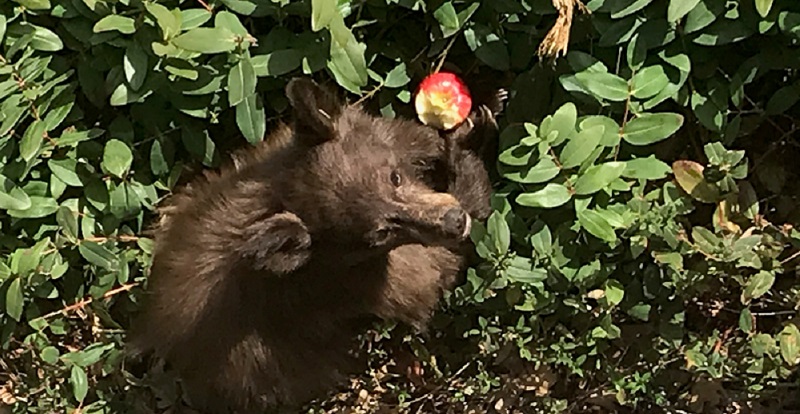
    When it comes to ordinary or outlandish black bear behavior, the Tahoe Interagency Bear Team (TIBT) has seen it all.

    Black bear deterrents that work in some parts of the country – air horns, motion-activated lighting or the loud banging of pots and pans – may be ineffective in the Tahoe Basin where bears have grown accustomed and desensitized to the sights and sounds of urban living, including car alarms, horns and music blaring from portable speakers.

    Instead, the TBIT, a collective of bear experts representing federal and state agencies in the Tahoe area, offers up the best practices and proven methods to keep Tahoe bears wild and people and property safe.

    Secure and Eliminate Attractants

    Residents and visitors have the power to prevent negative outcomes for black bears by always following the BearWise Basics. This includes properly securing garbage and recycling, removing attractants like human and pet food, grills and smokers, and bird feeders. Securing and eliminating attractants is the most important and effective long-term solution to prevent human-bear conflicts and keep bears wild.

    Electric Deterrents

    The ultimate defense against black bear break-ins and property damage is electricity. A few small businesses have sprouted up in the Lake Tahoe Basin in recent years catering to the demand for better bear-proofing.

    The “Cadillac” option for property owners is exposed electric fencing over doors, windows and other potential points of entry that provide a shock to any bear that comes into contact but does no lasting harm. Bears are smart and learn quickly to avoid such properties.

    Electrifying a whole home with exposed wiring is a significant investment costing anywhere from $3,000 to $8,000. Property owners considering this deterrent need to weigh the costs against that of their home insurance deductible or the increasingly common experience of being dropped by their insurance carrier for submitting a property damage claim. Whole-home electric fencing may make the most sense for second homes or vacation rentals that go unoccupied for periods of time.

    Electric doormats are another effective, less costly, non-lethal bear deterrent.

    Costing about $500-$600, well-placed electric mats in front of doors or below windows provide bears with a negative experience that often keeps them from coming back. Unlike whole-home electric fencing that will shock anything or anyone who comes into contact with the exposed wires, anyone wearing shoes or most types of footwear are immune from the shock of the electric mats. All these devices can be shut off when people and pets are around.

    The California Department of Fish and Wildlife (CDFW) and Nevada Department of Wildlife (NDOW) have a limited number of electric mats – what the agencies call “Unwelcome Mats” – to loan out to those experiencing human-bear conflicts in the Lake Tahoe Basin.

    A properly installed, grounded and maintained electric fence will also keep bears out of chicken coops, gardens and backyard bee hives.

    Secure That Crawl Space

    Black bears typically enter dens between mid-November and December, particularly sows that will give birth to cubs in the winter. In the Tahoe Basin, outbuildings, porches, decks, crawl spaces, RVs and vacation homes often substitute for the natural dens wild bears will typically seek out. Bears will often look for easy entry routes, like vents and doors, that they can rip open to gain access. They can fit into very small openings. Generally, if a bear can get its head inside, the rest of the bear can follow. Once underneath a house, bears will often pull down insulation or scoop up available debris for bedding. This activity often causes damage to cable and electric wiring, piping that supplies heat to the home, and water and gas lines.

    Allowing a bear to access space in your home is detrimental. This type of comfort level around humans and their properties can lead to future conflicts for you and your neighbors. It’s also imperative that female bears do not teach their offspring to seek out this sort of unnatural denning.

    Securing your crawl space now is one way to prevent an unwanted guest this winter. Openings that lead under your house and other buildings should be boarded up with thick plywood with no gaps or prominent edges that bears can use for leverage to rip off the wood. See how to properly secure a crawl space in this video.

    Dogs

    Bears don’t like them, plain and simple, and properties with a canine resident or two can experience fewer bear visits than properties without a dog around. Always ensure there is not a bear in your backyard before letting your dog out and never purposely send your dog after a bear.

    Unleashed dogs are often one of the greatest sources of negative human-bear interactions and can lead to injuries to yourself and your pet. See BearWise’s Safety Tips for Dog Owners for more information.

    NDOW uses specially trained Karelian Bear Dogs (KBDs) as a non-lethal management tool to haze bears during releases and to search for bears during human-wildlife conflicts.

    Paintballs

    Shooting paintballs at a bear on your property will force it to move along quickly and is one of the most common and effective hazing tools used by wildlife professionals in the Tahoe Basin. Aim at the rear of the bear, not the head. Avoid red-colored paintballs as some might later think the bear is injured. Many paintball markers look like firearms to the general public, so limit their use to your immediate property and not the larger community.

    Bear Spray

    Learn how to use bear spray and carry it with you outdoors in case of an aggressive bear confrontation. Remember, bear spray is designed to protect yourself from an imminent physical encounter and is not to be used as a repellent or hazing method. Bear spray is equally effective on mountain lions and coyotes.

    Scare the Bear

    BearWise offers a number of tips on why and how to safely haze a bear in its Scare the Bear digital flier that can be downloaded and printed. For more information on coexisting with bears, visit BearWise.org

    Categories:   Hibernation, Human Wildlife Conflict, Hyperphagia

    The Challenge and the Response

    Black bear conflicts have increased in the Lake Tahoe Basin in recent years, creating serious concerns for public safety and property damage. To meet this challenge, the California Department of Fish and Wildlife (CDFW) launched the Trap-Tag-Haze (TTH) program in 2020. This cutting-edge, science-based program combines humane capture methods, genetic analysis and nonlethal hazing to reduce conflict and improve coexistence.

    By summer 2025, CDFW and its partners had trapped, tagged, hazed, and genetically documented more than 360 individual bears, and efforts continue across the basin.

    How the Program Works

    CDFW and cooperating agencies manage human–bear interactions through three coordinated phases:

    1. Trap: Biologists set ethical cage traps in conflict hot spots to humanely capture bears.
    2. Tag and Assess: While safely sedated, each bear receives a numbered ear tag and a full health evaluation. DNA samples (blood, hair and saliva) are also collected for profiling.
    3. Haze and Release: After the bear recovers from sedation, staff haze bears with noisemakers, paintballs or beanbag rounds to reinforce negative associations with developed areas and humans before releasing them into nearby suitable habitat.

    This structured approach improves safety, ensures consistent hazing actions to intervene on negative behaviors, and creates long-term data that informs management decisions.

    Genetic Insights and Conflict Behaviors

    DNA analysis has transformed how CDFW manages bears in Lake Tahoe. Genetic profiling allows biologists to:

    • Accurately identify individual bears.
    • Avoid misidentification, which often occurs when relying only on appearance or sightings.
    • Track how conflict behaviors are passed down through family lines.

    Research shows that mothers often pass conflict behaviors to their offspring. Bears that repeatedly access human food sources frequently teach these behaviors to cubs, creating generational patterns of conflict behavior. When one bear teaches multiple offspring conflict behavior, increased conflicts occur across developed landscapes.

    Case Studies: Family Lineages in the Tahoe Keys

    Genetic evidence shows that conflict behaviors often pass through family lines when bears gain repeated access to human food and garbage. The family of Bear 182 provides a clear example of this pattern, with conflict behaviors extending across multiple generations.

    Matriarch: Bear 182

    • First linked to a public safety incident in 2020 in the Tahoe Keys.
    • Trapped-tagged-hazed in 2022 along with three yearlings: Bears 180, 753, and 215.
    • Continued home invasions, as a learning group, through 2023.
    • Produced another cub, Bear 1975, in 2023.
    • After another public safety incident in fall 2023, CDFW euthanized Bear 182.

    First Litter (2021 Yearlings): Bears 180, 753, and 215

    • Bear 180 – Detected in multiple home invasions by late 2022. Aggressive behavior escalated through 2023. CDFW euthanized the bear after repeated invasions and depredation requests.
    • Bear 753 – Genetically linked to 12 home invasions since 2022, plus several visual identifications. Now raising a cub that has already been genetically detected inside homes, continuing the cycle of conflict.
    • Bear 215 – Still active in South Lake Tahoe. Genetic detections confirm three home invasions as of July 2025.

    Second Litter (2023 Cub): Bear 1975

    • Detected genetically with Bear 182 (matriarch) in 2023.
    • Collared and released after 182’s euthanasia.
    • Continued to raid homes and caused safety issues, including incidents near a children’s camp in Kirkwood.
    • Despite relocation attempts, Bear 1975 persisted in conflict behavior and was euthanized in 2024.

    A Generational Pattern

    Across three generations -- Bear 182, her multiple seasons of yearlings (180, 753, 215, 1975), and now 753’s cub -- CDFW has documented a consistent pattern of home invasions and conflict behaviors. Genetic analysis confirmed that these behaviors were not the work of a single “problem bear,” but rather a family lineage repeatedly engaging in the same actions. This evidence underscores the limits of visual identification and demonstrates the need for genetic data to guide accurate, science-based management decisions.

    Reducing Attractants: Community Action

    In addition to managing bears directly, CDFW invests in reducing human-related attractants. In 2022, CDFW secured $2 million from the California Legislature to expand bear-resistant garbage infrastructure in the Lake Tahoe Basin. Through local assistance grants, Placer and Alpine counties installed 395 residential bear-proof enclosures and four multi-family bear-proof dumpsters by June 2025.

    The public can help prevent negative outcomes for black bears by always practicing good BearWise Basics. This includes removing attractants like trash, human and pet food, grills and smokers, and bird feeders in high bear-activity areas.

    These efforts reduce food access, decrease habituated behaviors, and keep bears wild. 

    Why This Matters 

    The Trap-Tag-Haze program illustrates how CDFW applies science-based, proactive management to reduce conflict. Its key strengths include: 

    • Accurate identification through tagging and genetic profiling.
    • Insights into family-level behavior patterns that inform long-term management.
    • Targeted hazing builds negative associations with developed areas.
    • Community investment in bear-proof infrastructure that limits attractants.

    Effective coexistence requires both responsible human behavior and consistent wildlife management. By combining genetic science, active fieldwork, and community partnerships, CDFW advances a management model that prioritizes public safety, reduces property damage, and conserves wildlife.

    Graphic illustrating family relations in bear conflict activity.
    Graphic illustrating family relations in bear conflict activity.

    Categories:   Human Wildlife Conflict, Public Safety, Research, Tahoe Keys

    CDFW scientific staff acted quickly to avert a house fire and help save a property on Butler Avenue in South Lake Tahoe Aug. 21 after a black bear broke into an unoccupied home and ignited its gas stove.

    Fire is among the dangers and public safety concerns when bears break into homes looking for human-sourced food and trash, which is a near-daily occurrence in the Lake Tahoe Basin and a consequence of bears that have grown accustomed to and dependent on human sources of food.

    A CDFW staff member was called to collect DNA evidence from a home in a neighborhood near Butler Avenue after a bear break-in was reported. While attempting to locate the two bears hazed out of the home, CDFW’s staff came across another home on Butler Avenue with a pushed-in window and trash scattered about – telltale signs of another bear break-in. The staff member knocked on the door, smelled gas and called 911 for help. Items were melting on the stovetop. Emergency responders arrived, turned off the gas and averted a potentially catastrophic fire to the unoccupied home, neighboring homes and the surrounding forest. The two bears—an adult female and its cub—had fled up a nearby tree.

    The female bear carries the yellow ear tag numbered 753 and is well-known to CDFW and the local community. This particular bear has a long history of home invasions and escalating conflict behavior in South Lake Tahoe dating to 2022.  Since July 20, 2025, DNA evidence has linked this bear to at least 12 home invasions in South Lake Tahoe of both occupied and unoccupied homes. Sadly, the bear is teaching this behavior to its cub and potentially perpetuating another generation of human-bear conflict and bear-related property damage in the Lake Tahoe Basin.

    Shortly thereafter, the CDFW staff member was monitoring the two bears up the tree, carrying only a paintball gun for bear-hazing purposes, when members of the public arrived threatening the staff member’s safety and using vulgar language to incite fear.

    A local social media post erroneously inflamed the situation by asking people nearby to “witness” the situation.

    Ultimately, South Lake Tahoe Police were called to diffuse the situation so CDFW’s staff member could get safely to their vehicle. CDFW will continue to monitor the situation while prioritizing the safety of the South Lake Tahoe community and its wildlife.

    CDFW reminds the public to prevent further conflict with bears by securing food and trash. You can find out more on CDFW’s website.

    Categories:   Public Safety, South Lake Tahoe

    Office of Communications, Education and Outreach
    P.O. Box 944209, Sacramento, CA 94244-2090
    (916) 322-8911