The California Department of Fish and Wildlife (CDFW) and California State Parks have removed a bear that was a danger to public safety in South Lake Tahoe with a long history of human conflict, including multiple home invasions and vehicle break-ins.
At 4:30 a.m. on Sunday, June 22, the light-colored female bear, or sow, entered an occupied trailer belonging to a camper at Eagle Point Campground within Emerald Bay State Park. After being awoken by the bear trying to gain entry, the camper attempted to scare the bear off by banging pots and pans, screaming at the bear and making a loud commotion. Undeterred, the bear forced its way into the trailer and swiped at the camper, leaving her with cuts and bruises on her arms and hand and requiring an escorted trip to the hospital. Later that same morning, the bear ripped the door open on a camper-van with teenagers sleeping inside and later was reported harassing other campers within the same campground.
Following the camper attack, the bear was deemed a “Public Safety Bear” under CDFW’s 2022 Black Bear Policy in California (PDF) and targeted for immediate removal. The bear was located in the vicinity of the Eagle Point Campground the following day, June 23, and euthanized by a State Parks ranger. DNA testing confirmed it was the same bear responsible for the attack.
CDFW and California State Parks had been attempting to trap the bear since June 17. The sow’s two cubs of the year have been captured and delivered to a wildlife rehabilitation facility in northern California in the hope they can be rehabilitated and returned to the wild.
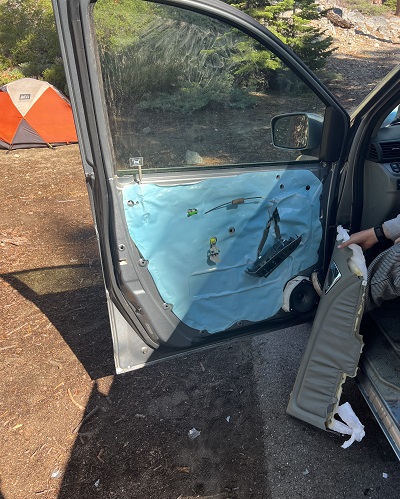 A door damaged by a South Lake Tahoe black bear.
“As wildlife professionals who devote our careers to the health and well-being of California’s fish and wildlife species, euthanasia is a measure of last resort,” said Morgan Kilgour, regional manager for CDFW’s North Central Region. “Our foremost responsibility, however, remains the protection of human life and the safety of the Tahoe region.”
Since the spring, the sow had generated multiple 911 emergency calls and unrelenting conflict activity. DNA evidence linked the bear to multiple attempted home and vehicle break-ins along Cascade Road in South Lake Tahoe and many confrontations at the Eagle Point Campground.
On June 10, the bear entered an occupied vehicle at the campground with a child fastened to a child seat inside.
The bear had been unresponsive to multiple attempts to haze it out of human-occupied areas. The bear had been aggressively hazed by four different agencies, including CDFW, State Parks and the U.S. Forest Service on at least seven different occasions, yet the conflict behavior persisted.
“California State Parks is really the gold standard when it comes to human-bear conflict prevention,” said Kilgour. “There is nothing State Parks could or should have done differently at Emerald Bay State Park. State Parks is a model with their well-maintained bear boxes and other bear-proof infrastructure and clean campgrounds. They do a thorough job of educating their visitors and camp hosts on preventing human-bear conflicts.”
CDFW hopes for a better outcome for the sow’s two 5-month-old cubs now at a wildlife rehabilitation facility permitted to care for and rehabilitate bears.
“Bear cubs learn everything from their mothers – good and bad behavior alike,” Kilgour explained. “A mother bear that constantly searches human-occupied areas for unnatural food sources, breaks into homes and vehicles teaches this behavior to her cubs and perpetuates another generation of human-bear conflict. Removing these cubs from this conflict activity early in their lives gives them a chance that they can return to the wild and live as wild bears should.”
Photos: The female bear euthanized by officials had a long history of home invasions and vehicle break-ins in South Lake Tahoe stretching over two years. The sow destroyed the vehicle door above trying to gain entry.