CNDDB logo

Subscribe

Sign up to receive new posts by email.

    Search

    CNDDB News Blog

    All CNDDB Blog Posts

    rss

    The link opens in new windowCNDDB Online Field Survey Form is a fantastic tool for observers to submit their findings to us. Often times, reporters include pictures of species and habitats along with the forms. Over the years, we have come across great photo submissions and want to start highlighting a few each month. Here are the April photos of the month!

    Rana boylii – foothill yellow-legged frog
    Submitted by Lauren Dusek of Stillwater Sciences
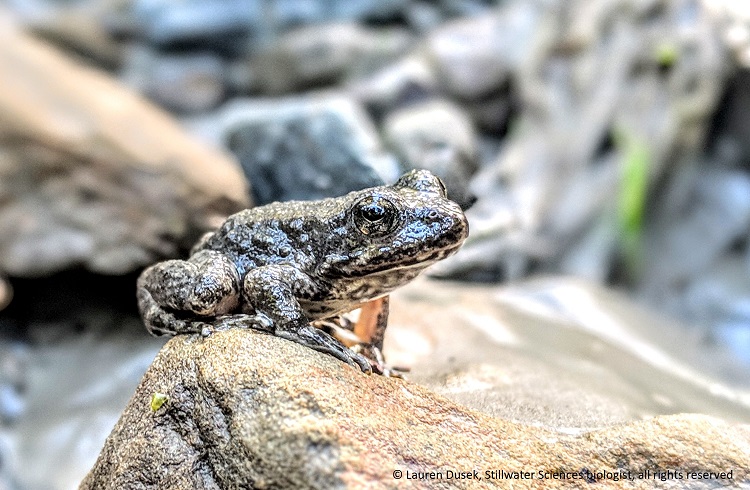
    foothill yellow-legged frog on a rock

    Lauren came across 2 adult foothill yellow-legged frogs perched on a rock near the Van Duzen River in Humboldt County and was able to snap a photo of one of them. Currently, Rana boylii is a candidate species for the California Endangered Species Act and has been a species of focus for the CNDDB for the past year. Thank you Lauren, for your great submission!

    Erythronium citrinum var. citrinumlemon-colored fawn lily
    Submitted by Daniel D. Palmer of the California Department of Transportation
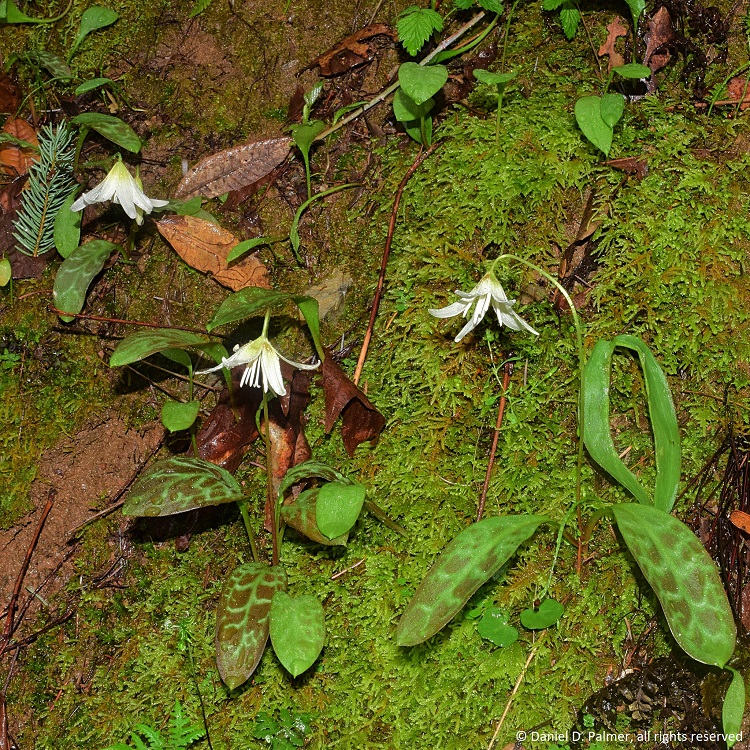
    lemon-colored fawn lilies

    Daniel found these amazing plants in Trinity County along a road cut under the canopy of a hardwood, conifer mixed forest. Erythronium citrinum var. citrinum is a California Rare Plant Rank 4 plant found in northwestern California and up into Oregon. Thank you Daniel, for this amazing picture and submission!

    Do you have some great photos of rare plant or wildlife detections? Submit them along with your findings through our link opens in new windowOnline Field Survey Form and see if your photos get showcased!

    Categories:   Contributor Spotlight

    An exciting botanical discovery has recently been made! A new species of spineflower, Chorizanthe aphanantha (Irish Hills spineflower), has been formally described after its discovery on the Irish Hills Natural Reserve in San Luis Obispo County. This species was found growing in rocky openings of serpentine chaparral and can occur with several other rare, serpentine-endemic taxa. So far, this new species has only been found on the Irish Hills Natural Reserve and nowhere else in the world!

    The CNDDB botany program and the California Native Plant Society’s Rare Plant Program will be working together over the next few weeks to review this species for addition to the CNDDB Special Vascular Plants, Bryophytes, and Lichens List and to the CNPS Inventory of Rare and Endangered Plants.

    For additional information about this discovery, see the link opens in new windowCity of San Luis Obispo’s webpage.

    Categories:   Education and Awareness, Taxon of the week

    The "link opens in new windowEndangered, Threatened, and Rare Plants List (PDF)" and "link opens in new windowEndangered and Threatened Animals List (PDF)" have both been updated. No changes to federal Endangered Species Act listing status have occurred since the previous updates, but the California Endangered Species Act (CESA) listing status for several taxa has changed as follows:

    • Coast yellow leptosiphon (Leptosiphon croceus): Endangered (Effective date of regulation: April 1, 2019)
    • Lassics lupine (Lupinus constancei): Endangered (Effective date of regulation: April 1, 2019)
    • Humboldt marten (Martes caurina humboldtensis): Endangered (Effective date of regulation: March 18, 2019)
    • Tricolored blackbird (Agelaius tricolor): Threatened (Effective date of regulation: March 18, 2019)
    • Northern spotted owl (Strix occidentalis caurina): Threatened (Effective date of regulation: March 18, 2019)
    • Fisher (Pekania pennanti), Southern Sierra Nevada ESU: Threatened (Effective date of regulation: March 18, 2019)
    • Upper Klamath-Trinity River Spring Chinook Salmon (Oncorhynchus tshawytscha): declared a candidate species (February 2019)
    Links to the T&E lists can be found on the link opens in new windowCNDDB Plants and Animals web page. More information about state listing can be found at the California Fish and Game Commission link opens in new windowCESA website.

    Categories:   Quarterly Updates

    Conservation Lecture Series Presents: Statewide Research Informs Regional Conservation Priorities for Mountain Lions in California

    In 2015, CDFW began an effort to understand abundance, habitat use, genetics, and health of mountain lions across California. Though the effort is still well underway, great strides have already been made to increase understanding of multiple aspects of mountain lion ecology in California. This talk will detail the statewide efforts and findings to date as well as detail what is yet to come concerning CDFW’s role in conserving and managing mountain lions in California.

    Science Institute logoDate: Wednesday, April 24, 1-3 p.m.
    Location: Resources Building auditorium, 1416 9th Street, Sacramento CA
    Register to view in-person or online.

    Questions? Contact: Whitney.Albright@wildlife.ca.gov

    Categories:   Education and Awareness

    April 22 is Earth Day! See link opens in new windowhow CDFW is celebrating.

    Categories:   Education and Awareness

    bats exiting colony to feed at dusk

    Happy April, all! This month brings a very special day, International Bat Appreciation Day! Spring has sprung and as hibernation comes to an end, bats can be seen feeding on insects returning to the state. This means April is an opportune time to observe them. Because their diet consists mainly of insects, bats are crucial to California’s fragile farming industry. The California Natural Diversity Database currently tracks 21 of the 25 bat species that inhabit California and holds over 2,800 mapped occurrences! With the spread of white-nose syndrome and recorded cases of the disease in Washington state, protecting California’s bat species is more important than ever. Want to contribute to the monitoring of these awesome critters? Have you seen some of these species in your area? If so, submit your observations through our link opens in new windowOnline Field Survey Form!

    Categories:   Education and Awareness

    This past weekend was Citizen Science Day! We’d like to take this opportunity to celebrate all the scientists and nature enthusiasts from the public who are out there collecting valuable data that would otherwise be overlooked. The CNDDB wants to utilize the power of citizen science, so we have launched our own link opens in new windowiNaturalist project.

    iNaturalist is an online platform and mobile application that allows users to record and share observations of organisms. It also serves as a social network for crowdsourcing species identification and connecting an extensive network of citizen scientists. The CNDDB created its own iNaturalist project primarily to gain access to precise coordinate locations, since the locations of most species we track are obscured by iNaturalist users or the program itself in order to protect the species. It is important to note that using iNaturalist isn’t a substitute for filling out our link opens in new windowCNDDB field survey forms. The CNDDB field survey forms were designed to collect specific data that would meet the reporting requirements which many professional biologists and those working under a special permit are held to. If you are an iNaturalist user, please consider joining our iNaturalist project and opting in to sharing the specific location information of your rare species detections with us!

    iNaturalist logo

    screenshot of iNaturalist website interface

    Categories:   Education and Awareness

    California is a biodiversity hotpot. A large part of California’s biodiversity is a result of the exceptional number of native plant species in the state. California currently boasts over 6,500 native plant taxa with about 30% of those plants occurring nowhere else in the world. In conjunction with the large number of native plants in California comes a large number of rare plants as well. The CNDDB currently tracks nearly 2,400 rare plant taxa.

    To celebrate this amazing array of botanical diversity, the California State Legislature designated the third week of April to be California Native Plant Week. See the link opens in new windowCalifornia Native Plant Society website for activities in your area or simply venture outside for a hike to take in and appreciate all the native plant diversity California has to offer!

    rolling hills with purple and orange wildflowers

    Categories:   Education and Awareness

    Number of Element Occurrences in Current Distribution: 92,720
    Number of New Element Occurrences Added Since Last Distribution: 360
    Number of Source Documents Added: 1,505

    What we've been working on:

    Botany

    • Amsinckia lunaris (bent-flowered fiddleneck)
    • Astragalus rattanii var. jepsonianus (Jepson’s milk-vetch)
    • Balsamorhiza macrolepis (big-scale balsamroot)
    • Calystegia collina ssp. tridactylosa (three-fingered morning-glory)
    • Castilleja rubicundula var. rubicundula (pink creamsacs)
    • Centromadia parryi ssp. congdonii (Congdon's tarplant)
    • Ceanothus roderickii (Pine Hill ceanothus)
    • Cuscuta jepsonii (Jepson’s dodder)
    • Dithyrea maritima (beach spectaclepod)
    • Extriplex joaquinana (San Joaquin spearscale)
    • Fritillaria biflora var. ineziana (Hillsborough chocolate lily)
    • Gilia capitata ssp. pacifica (Pacific gilia)
    • Harmonia hallii (Hall's harmonia)
    • Hesperolinon drymarioides (drymaria-like western flax)
    • Lewisia cotyledon var. howellii (Howell’s lewisia)
    • Monolopia gracilens (woodland woollythreads)
    • Montia howellii (Howell's montia)
    • Navarretia nigelliformis ssp. radians (shining navarretia)
    • Sanicula saxatilis (rock sanicle)
    • Sidalcea hickmanii ssp. parishii (Parish's checkerbloom)

    Zoology

    • Athene cunicularia (burrowing owl)
    • Callophrys mossii marinensis (Marin elfin butterfly)
    • Entosphenus lethophagus (Pit-Klamath brook lamprey)
    • Entosphenus similis (Klamath River lamprey)
    • Euphydryas editha quino (quino checkerspot butterfly)
    • Rana boylii (foothill yellow-legged frog)
    • Rana cascadae (Cascades frog)
    • Spea hammondii (western spadefoot)
    • Taxidea taxus (American badger)

    Categories:   Monthly Updates

    The quarterly update of the Barred Owl Observations Database is available in the BIOS Viewer for CNDDB Subscribers. The barred owl database includes barred owl (Strix varia), Strix hybrid, and unknown Strix detections.

    Many of the records represent incidental detections made during spotted owl surveys; therefore, this dataset may not accurately represent the current distribution of barred owls in California. Furthermore, this dataset is only available to CNDDB subscribers because it contains references to sensitive spotted owl locations. A public version will be available in the future.

    For a copy of the geodatabase or for site-specific inquiries, contact the database manager at owlobs@wildlife.ca.gov.

    screenshot of BIOS mapping application

    Categories:   Quarterly Updates

    Biogeographic Data Branch
    Physical Address: 1700 9th Street, 4th Floor, Sacramento, CA 95811
    Mailing Address: P.O. Box 944209, Sacramento, CA 94244-2090
    (916) 322-2493 | BDB@wildlife.ca.gov